GeoVerse Lab
โ† AI & Computing Sciences Division

Machine Learning Center

Advances deep learning architectures and neural network algorithms - transformers for sequential geophysical data, graph neural networks for spatial relationships, physics-informed neural networks, and federated learning - for earth science prediction and classification tasks.

โš™๏ธ GeoVerse System Administration Division๐Ÿ–ฅ๏ธ AI & Computing Sciences Division๐Ÿ”ฌ Basic Sciences Divisionโšก Intelligent Geophysical Exploration Division๐Ÿ›ข๏ธ Resource & Energy Engineering Division๐ŸŒ Applied Geoscience Solutions Division๐Ÿ’ผ Economics, Policy & Strategy Division๐ŸŽ“ Education & Training Development Division๐Ÿš€ Innovation & International Collaboration Division
Machine Learning CenterNatural Language Processing CenterComputer Vision CenterHigh-Performance Computing CenterQuantum Computing CenterGenerative AI & Foundation Models CenterReinforcement Learning & Agents CenterAI Safety & Alignment CenterAI for Science CenterRobotics & Embodied AI Center
Frank Rosenblatt๐Ÿ”‘
โญ Center Chief
Frank Rosenblatt
Center Head
๐Ÿ’ก Invented the Perceptron, origin of neural networks
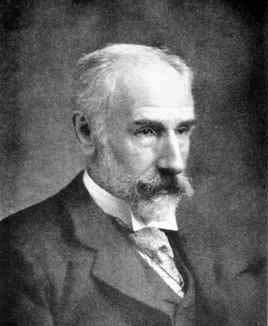
Francis Ysidro Edgeworth๐Ÿ”‘
1845โ€“1926
Francis Ysidro Edgeworth
Researcher
๐Ÿ’ก Developed among the earliest rigorous statistical methods for identifying outliers/anomalous observations in data ('Edgeworth's criterion'), founding the statistical theory of anomaly detection later formalized in modern novelty-detection algorithms
๐Ÿ–ฅ๏ธ AI & Computing Sciences DivisionMachine Learning Center
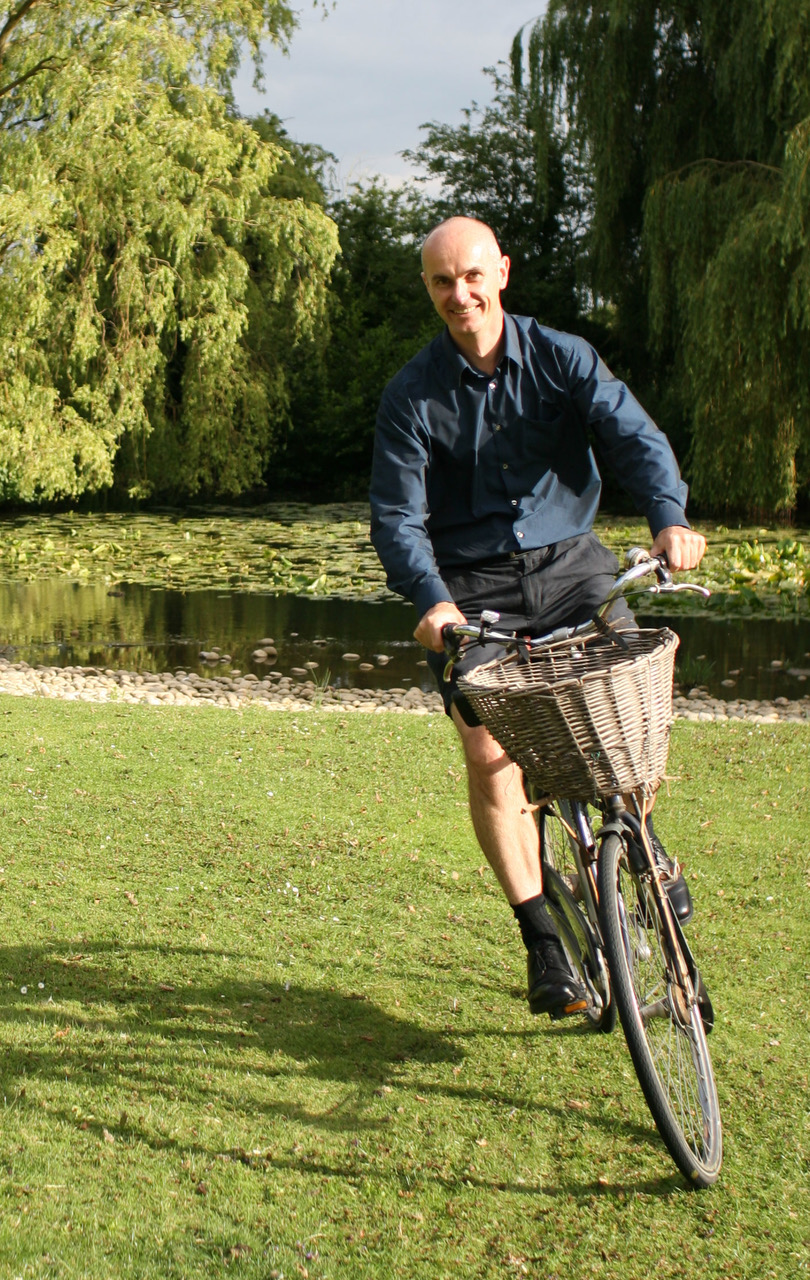
David J. C. MacKay๐Ÿ”‘
1967โ€“2016
David J. C. MacKay
Researcher
๐Ÿ’ก Founded practical Bayesian methods for neural networks, showing how to place probability distributions over network weights to obtain calibrated predictive uncertainty, directly foundational to modern Bayesian deep learning for high-stakes geoscience prediction
๐Ÿ–ฅ๏ธ AI & Computing Sciences DivisionMachine Learning Center
Hugo Steinhaus๐Ÿ”‘
1887โ€“1972
Hugo Steinhaus
Researcher
๐Ÿ’ก First proposed the k-means clustering approach (partitioning data to minimize within-group variance), founding the most widely used unsupervised learning algorithm for discovering structure in unlabeled geoscience data
๐Ÿ–ฅ๏ธ AI & Computing Sciences DivisionMachine Learning Center
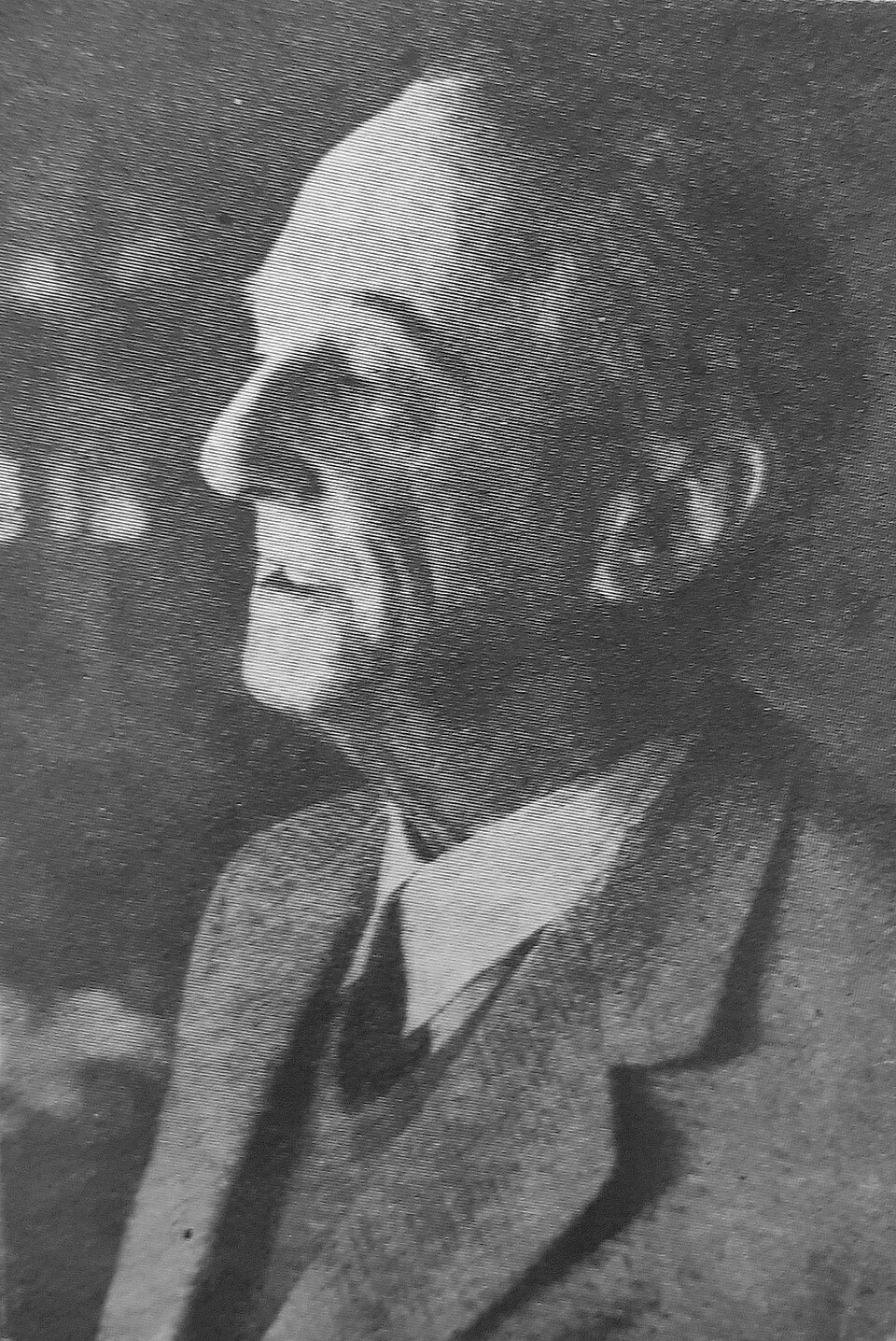
๐Ÿง‘โ€๐Ÿ”ฌ
๐Ÿ”‘
1928โ€“2010
Joseph B. Kruskal
Researcher
๐Ÿ’ก Invented multidimensional scaling (MDS), the foundational method for embedding high-dimensional data into a low-dimensional space while preserving pairwise distances โ€” the direct mathematical ancestor of modern manifold learning methods (t-SNE, UMAP)
๐Ÿ–ฅ๏ธ AI & Computing Sciences DivisionMachine Learning Center
๐Ÿง‘โ€๐Ÿ”ฌ
๐Ÿ”‘
1928โ€“2005
Leo Breiman
Researcher
๐Ÿ’ก Invented CART (Classification and Regression Trees), bagging, and random forests, founding the ensemble-tree methodology that remains among the most widely used machine learning methods for structured/tabular geoscience data
๐Ÿ–ฅ๏ธ AI & Computing Sciences DivisionMachine Learning Center
Solomon Kullback๐Ÿ”‘
1907โ€“1994
Solomon Kullback
Researcher
๐Ÿ’ก Co-developed the Kullback-Leibler divergence, the fundamental information-theoretic measure of difference between probability distributions, directly foundational to information-theoretic feature selection, model comparison, and regularization throughout machine learning
๐Ÿ–ฅ๏ธ AI & Computing Sciences DivisionMachine Learning Center
C. R. Rao๐Ÿ”‘
1920โ€“2023
C. R. Rao
Researcher
๐Ÿ’ก Founded the theory of statistical estimation efficiency (Cramรฉr-Rao bound, Rao-Blackwell theorem) determining how efficiently local statistical information can be combined into a global estimate โ€” directly foundational to aggregating locally-computed updates in federated learning
๐Ÿ–ฅ๏ธ AI & Computing Sciences DivisionMachine Learning Center
Frank Harary๐Ÿ”‘
1921โ€“2005
Frank Harary
Researcher
๐Ÿ’ก Known as the 'father of modern graph theory', wrote the field's standard textbook and systematized graph-theoretic concepts (adjacency, connectivity, isomorphism) that graph neural networks directly operate on for modeling spatial/relational geoscience data
๐Ÿ–ฅ๏ธ AI & Computing Sciences DivisionMachine Learning Center
๐Ÿง‘โ€๐Ÿ”ฌ
๐Ÿ”‘
1883โ€“1932
James Mercer
Researcher
๐Ÿ’ก Proved Mercer's theorem, characterizing when a function can be expressed as an inner product in a (possibly infinite-dimensional) feature space โ€” the exact mathematical justification for the 'kernel trick' underlying support vector machines and kernel methods
๐Ÿ–ฅ๏ธ AI & Computing Sciences DivisionMachine Learning Center
๐Ÿง‘โ€๐Ÿ”ฌ
๐Ÿ”‘
1938โ€“2014
Alexey Chervonenkis
Researcher
๐Ÿ’ก Co-developed (with Vladimir Vapnik) VC (Vapnik-Chervonenkis) theory, the mathematical foundation determining when and how much a learning algorithm can generalize from finite data โ€” the theoretical bedrock of all modern machine learning generalization guarantees
๐Ÿ–ฅ๏ธ AI & Computing Sciences DivisionMachine Learning Center
Donald Michie๐Ÿ”‘
1923โ€“2007
Donald Michie
Researcher
๐Ÿ’ก An AI founding-generation figure (Bletchley Park codebreaker) who pioneered the concept of machines that improve their own learning strategies over experience ('learning to learn'), founding the conceptual root of modern meta-learning and few-shot learning
๐Ÿ–ฅ๏ธ AI & Computing Sciences DivisionMachine Learning Center
Vladimir Arnold๐Ÿ”‘
1937โ€“2010
Vladimir Arnold
Researcher
๐Ÿ’ก Proved (with Kolmogorov) the Kolmogorov-Arnold representation theorem, showing any multivariate continuous function can be represented as a composition of univariate functions โ€” the theoretical foundation of universal function approximation now directly revived in Kolmogorov-Arnold Networks (KANs)
๐Ÿ–ฅ๏ธ AI & Computing Sciences DivisionMachine Learning Center
๐Ÿง‘โ€๐Ÿ”ฌ
๐Ÿ”‘
1915โ€“2001
Herbert Robbins
Researcher
๐Ÿ’ก Co-invented the Robbins-Monro stochastic approximation algorithm, the first rigorous method for finding the root/optimum of a function using noisy stochastic observations โ€” the exact mathematical ancestor of stochastic gradient descent, the workhorse optimizer of all deep learning
๐Ÿ–ฅ๏ธ AI & Computing Sciences DivisionMachine Learning Center
Ulf Grenander๐Ÿ”‘
1923โ€“2016
Ulf Grenander
Researcher
๐Ÿ’ก Founded pattern theory, a general statistical framework for learning the underlying generative structure of complex signals (images, shapes) directly from unlabeled data, foundational to self-supervised representation learning
๐Ÿ–ฅ๏ธ AI & Computing Sciences DivisionMachine Learning Center
Herman Chernoff๐Ÿ”‘
1923โ€“2026
Herman Chernoff
Researcher
๐Ÿ’ก Founded the theory of sequential/adaptive experimental design โ€” choosing which data point to observe next to maximize information gain โ€” the exact statistical-decision-theoretic foundation of active learning, where a model queries the most informative unlabeled samples
๐Ÿ–ฅ๏ธ AI & Computing Sciences DivisionMachine Learning Center