🎓GeoAcademyGeoVerse Lab
← Resource & Energy Engineering College

Rock Mechanics & Geomechanics Department

The Rock Mechanics & Geomechanics Department focuses on the stress-dependent behavior of rock that governs the safety of subsurface facilities. Students learn to quantitatively predict when and how rock fails using in-situ-stress and poroelastic modeling together with rock-failure-criterion simulation, and apply this to wellbore-stability assessment and hydraulic-fracturing design. Graduates are ready to personally evaluate subsurface integrity and set safety criteria for a range of underground operations, including CO2 and hydrogen storage.

⚙️ GeoAcademy System Administration College🖥️ AI & Computing Sciences College🔬 Basic Sciences College⚡ Intelligent Geophysical Exploration College🛢️ Resource & Energy Engineering College🌍 Applied Geoscience Solutions College💼 Economics, Policy & Strategy for the Future College🎓 Education & Training Development College🚀 Innovation & International Collaboration College
Well & Production Engineering DepartmentRock Mechanics & Geomechanics DepartmentGeothermal Energy Engineering DepartmentHydrogen Energy & Storage DepartmentCarbon Engineering DepartmentMining Engineering DepartmentNuclear Energy Engineering DepartmentReservoir Modeling & Recovery Department

Field-based Curriculum · 22

This department's curriculum is built directly on the GeoVerse Lab research fields its professors hold — click a field to see how it is taught.
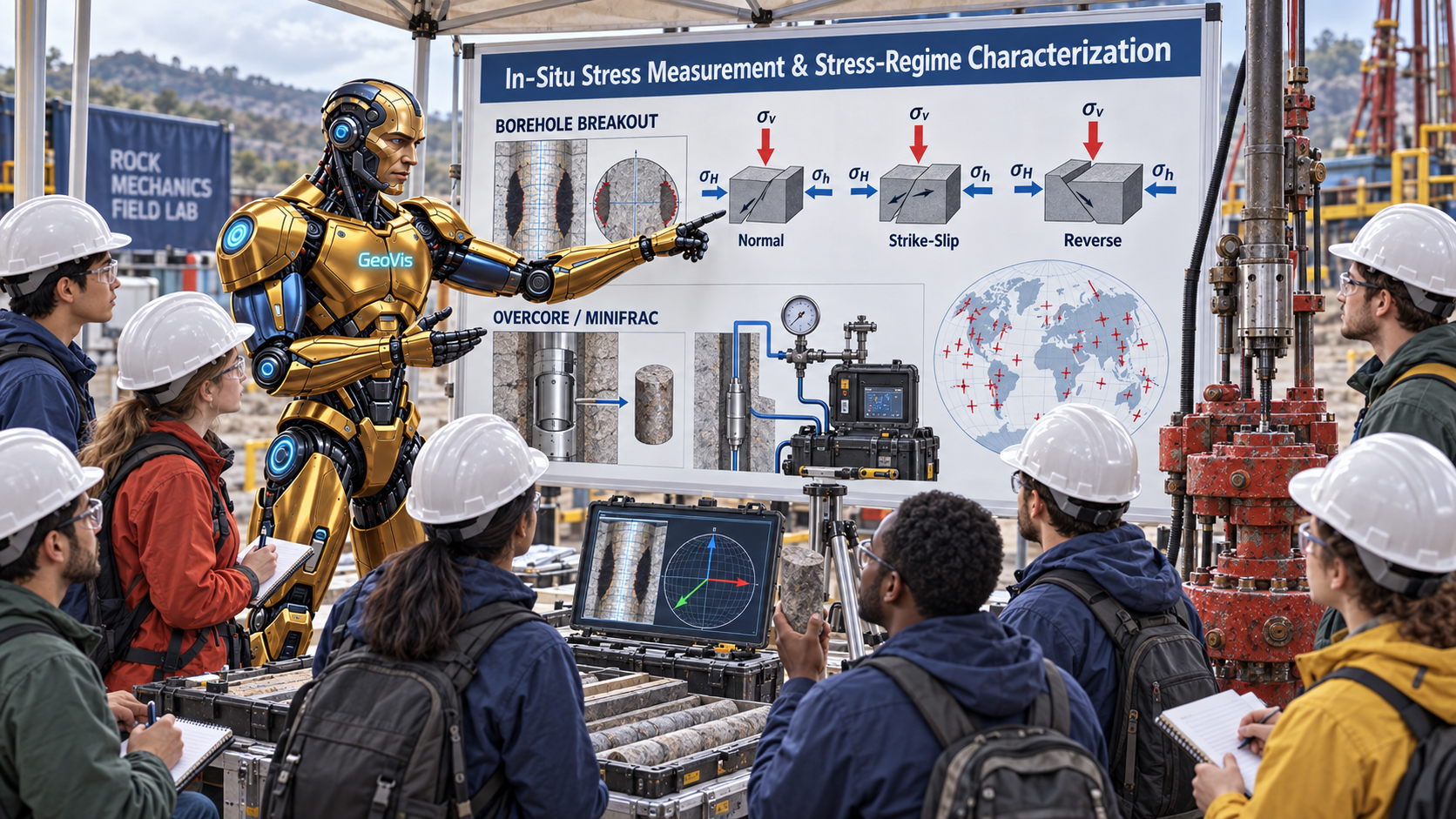
In-Situ Stress Measurement & Stress-Regime Characterization
In-situ stress measurement is taught as an inverse problem: students recover the…
Ernest Masson Anderson
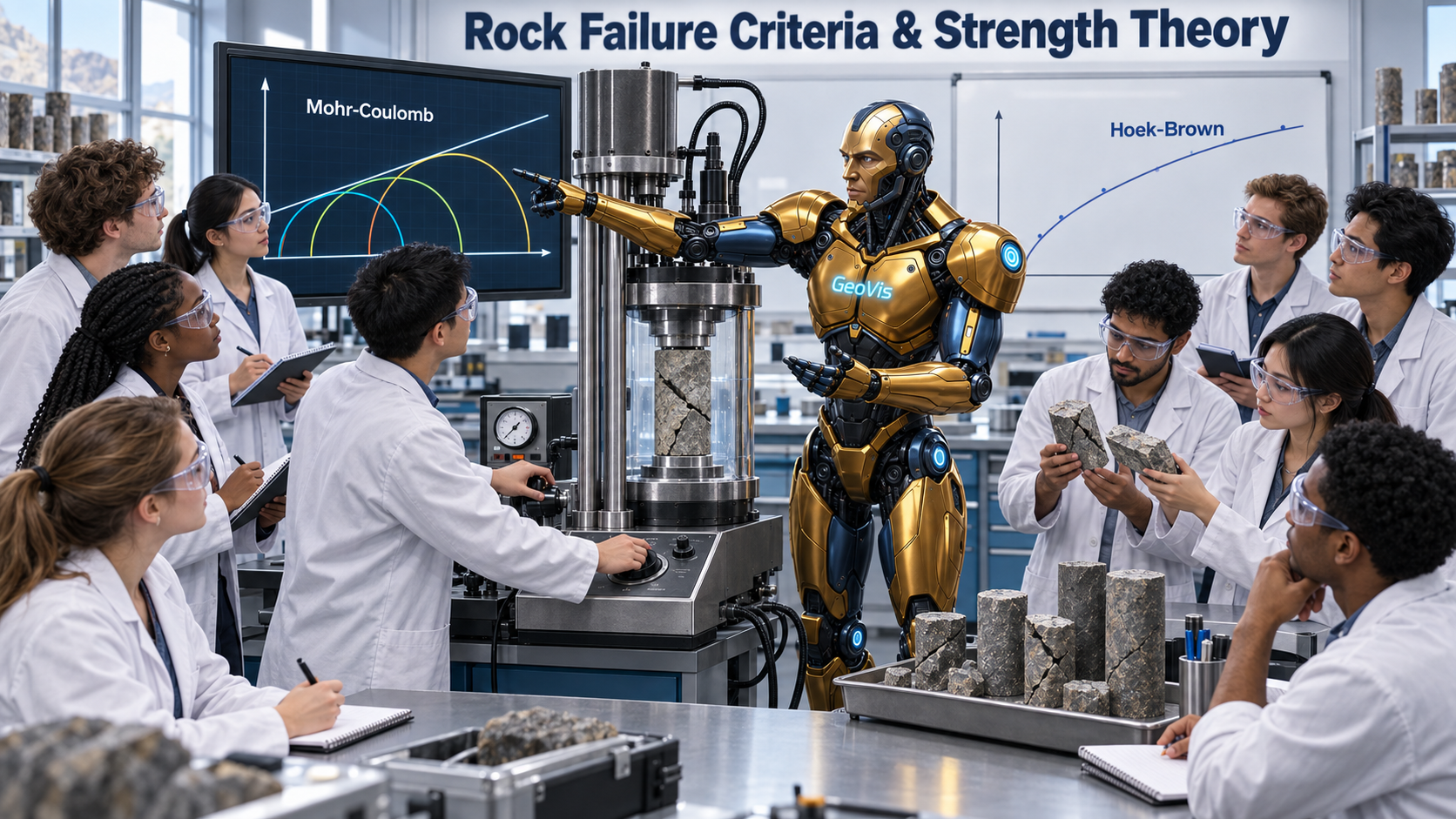
Rock Failure Criteria & Strength Theory
Rock failure criteria are taught as empirical strength theory: students fit Mohr…
John Conrad Jaeger
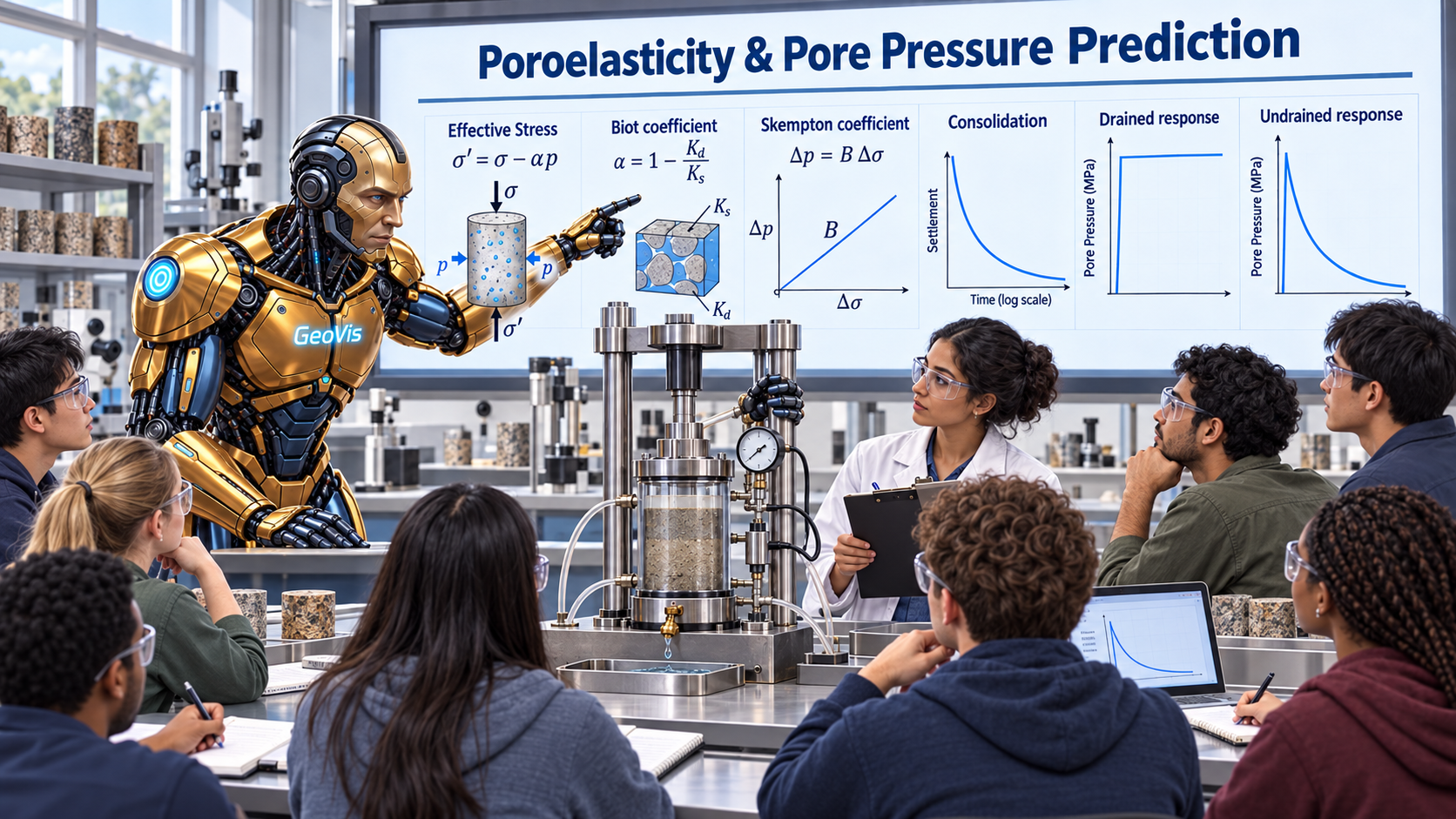
Poroelasticity & Pore Pressure Prediction
Poroelasticity is taught as coupled deformation-diffusion: students apply Biot a…
Leo Rendulic
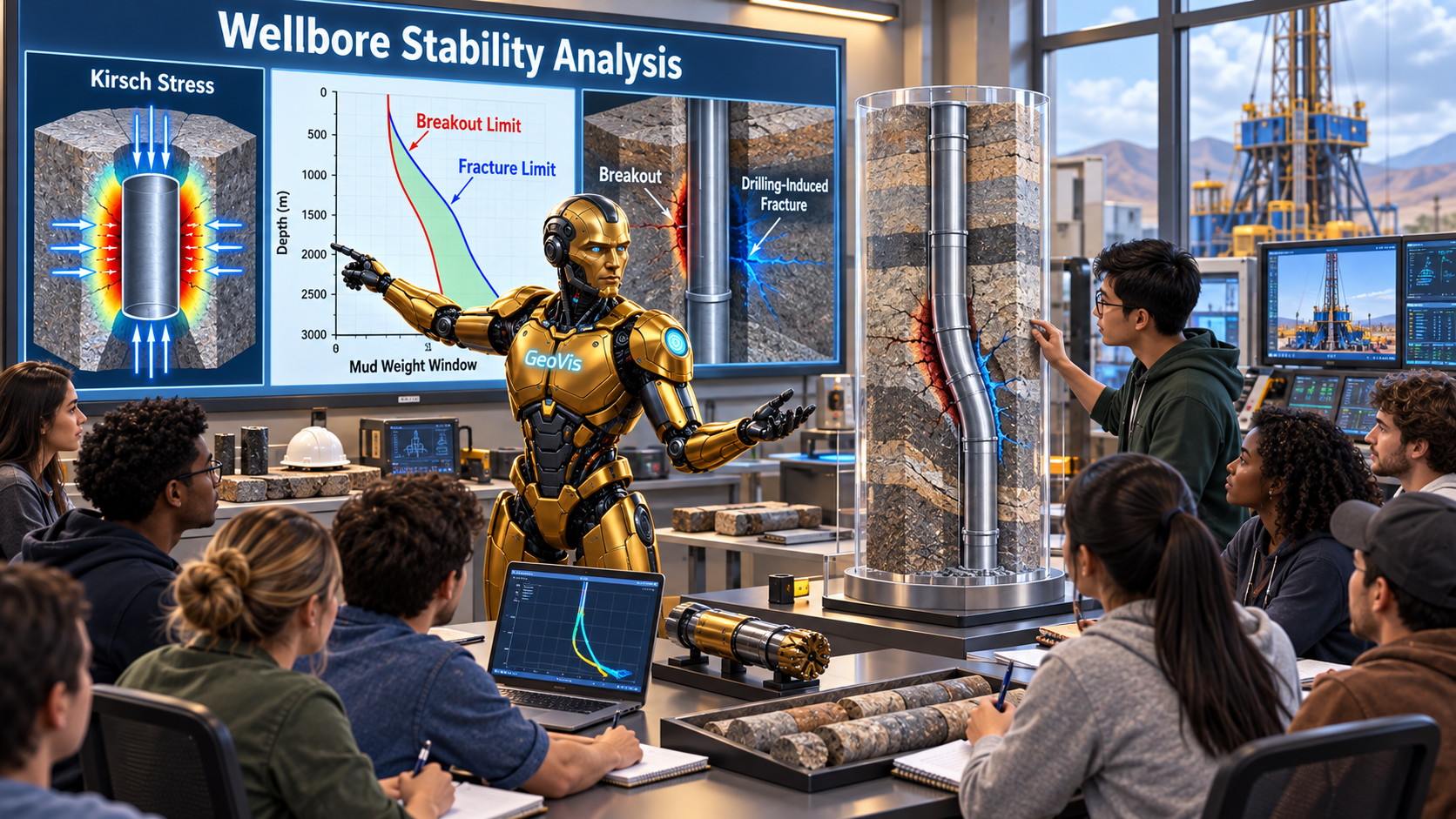
Wellbore Stability Analysis
Wellbore stability is taught as stress-concentration analysis: students combine …
Ernst Gustav Kirsch
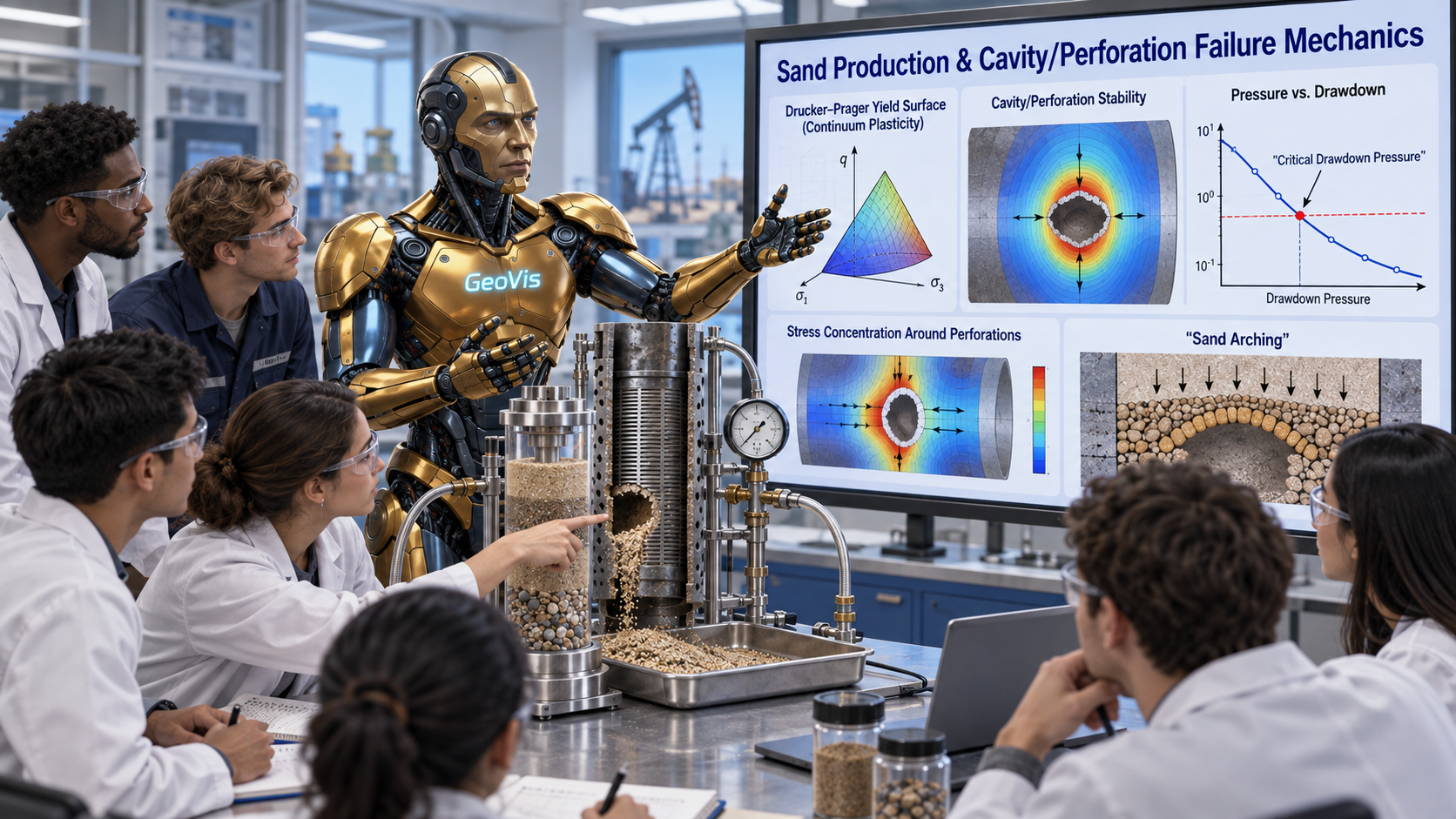
Sand Production & Cavity/Perforation Failure Mechanics
Sand production mechanics is taught as cavity failure: students compute critical…
Daniel C. Drucker
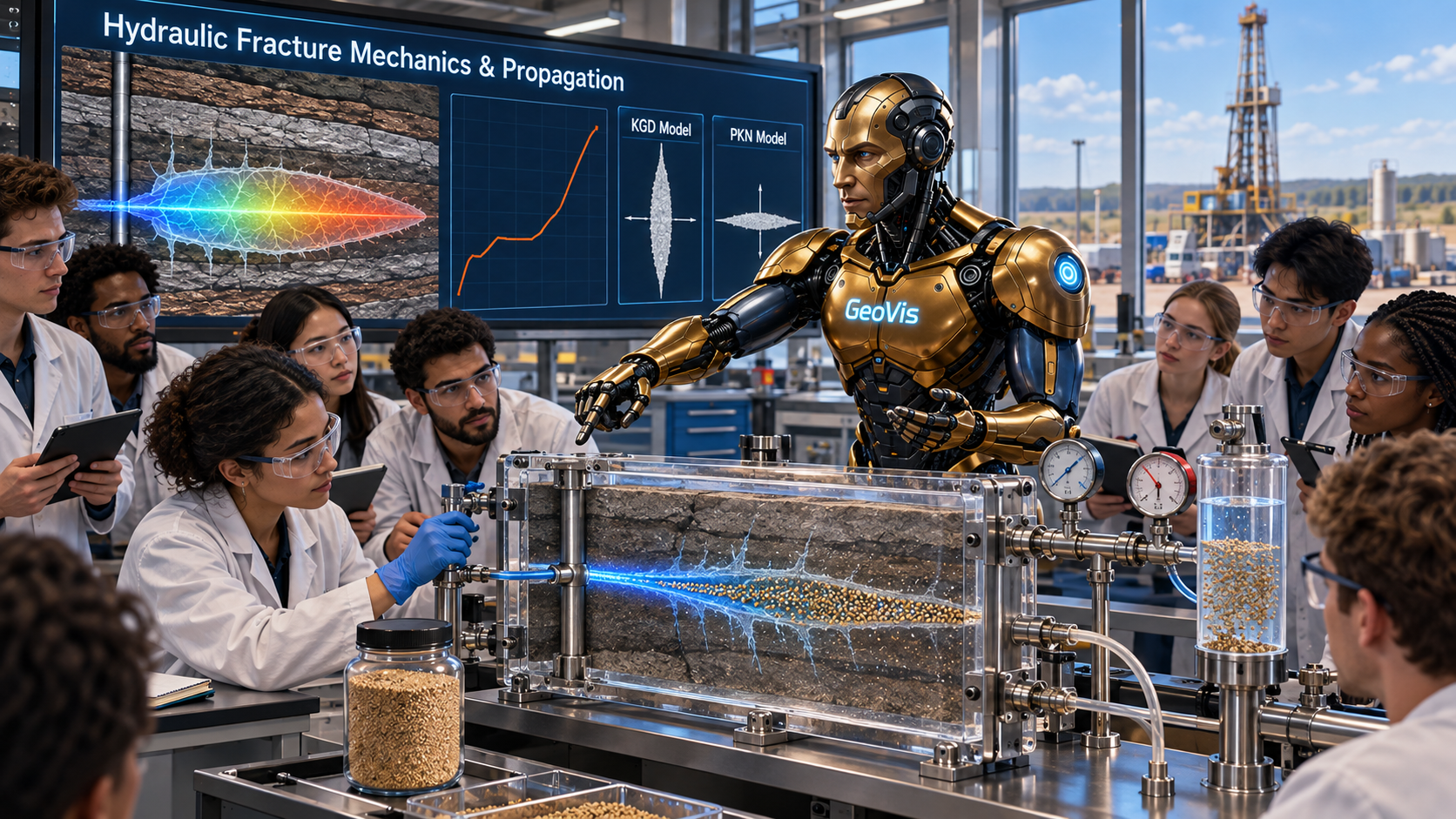
Hydraulic Fracture Mechanics & Propagation
Hydraulic fracture mechanics is taught as coupled fluid-solid-fracture problems:…
Sergey Khristianovich
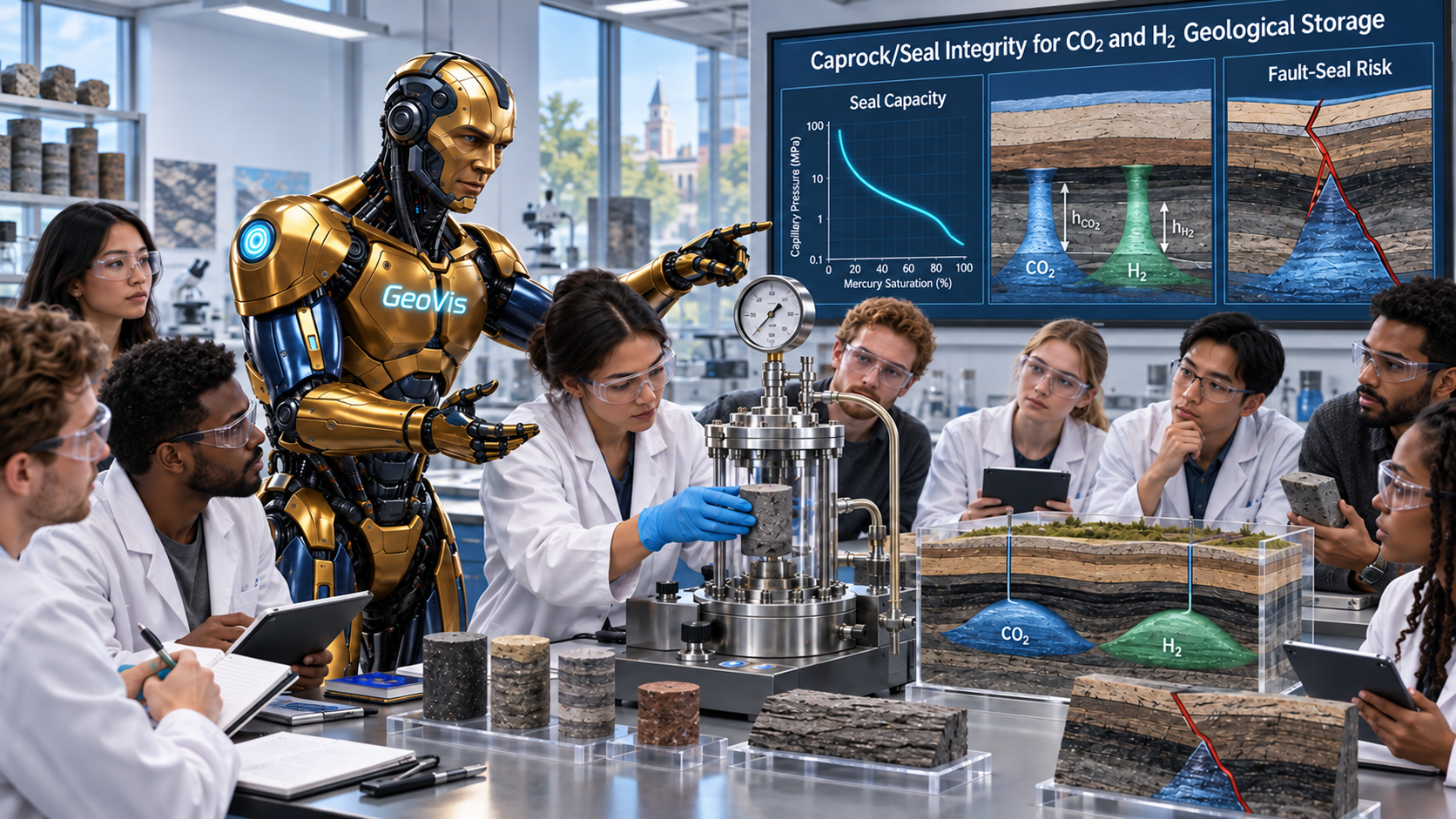
Caprock/Seal Integrity for CO2 and H2 Geological Storage
Caprock integrity is taught as dual capillary and geomechanical limits: students…
Robert R. Berg
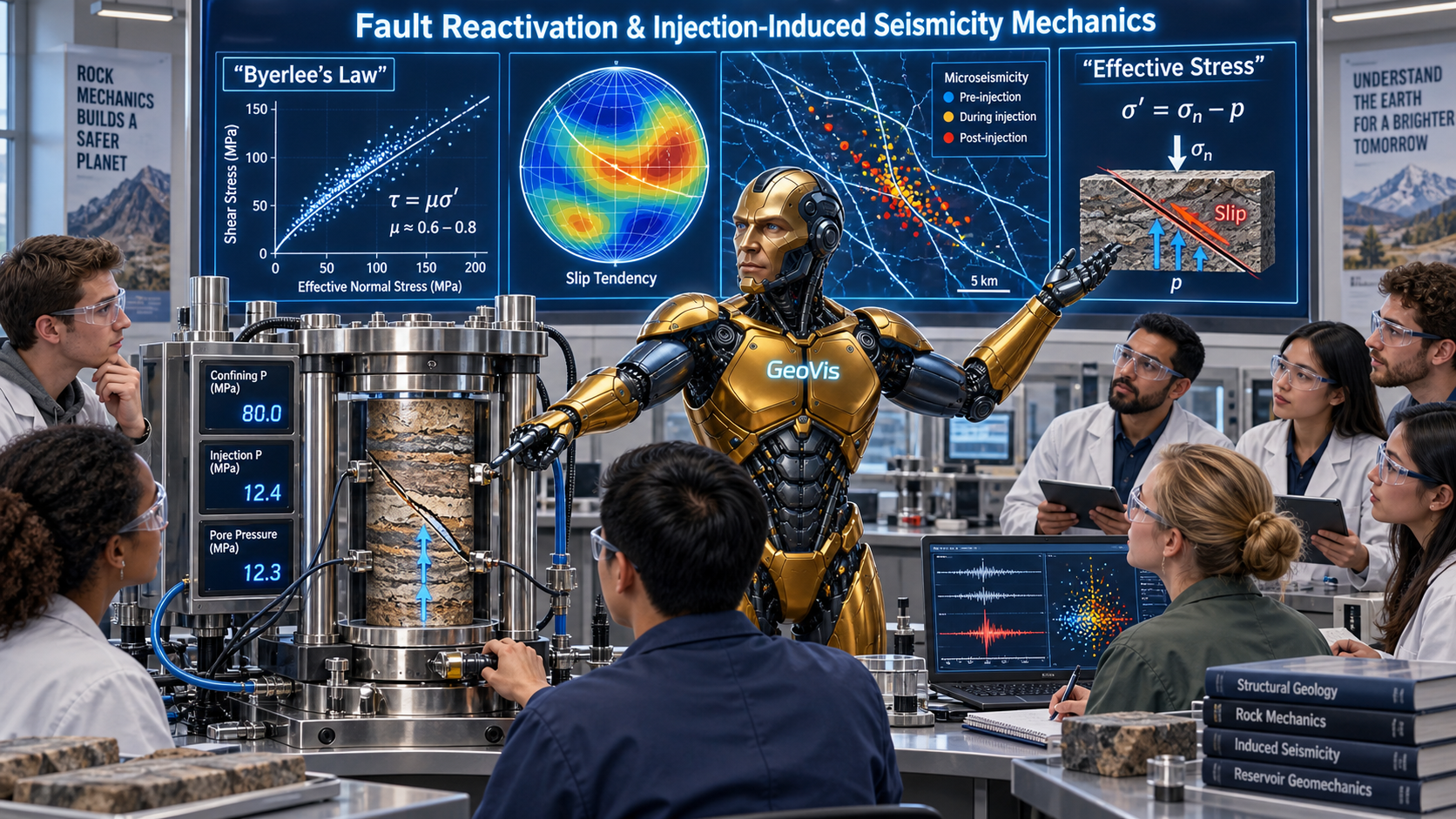
Fault Reactivation & Injection-Induced Seismicity Mechanics
Fault reactivation is taught as frictional-limit assessment: students quantify i…
James Byerlee
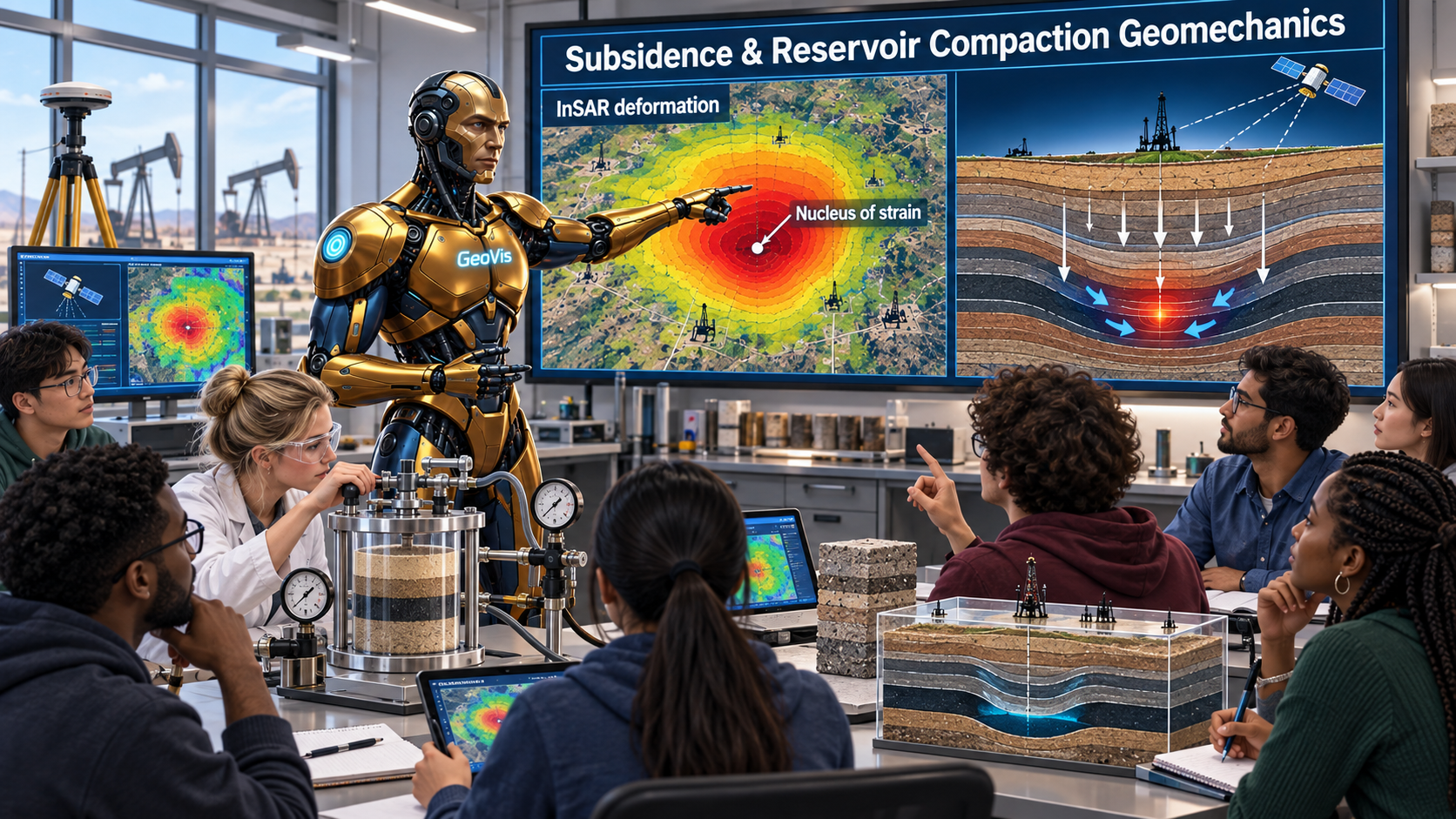
Subsidence & Reservoir Compaction Geomechanics
Subsidence and compaction is taught as propagation of surface displacement: stud…
Robert E. Gibson
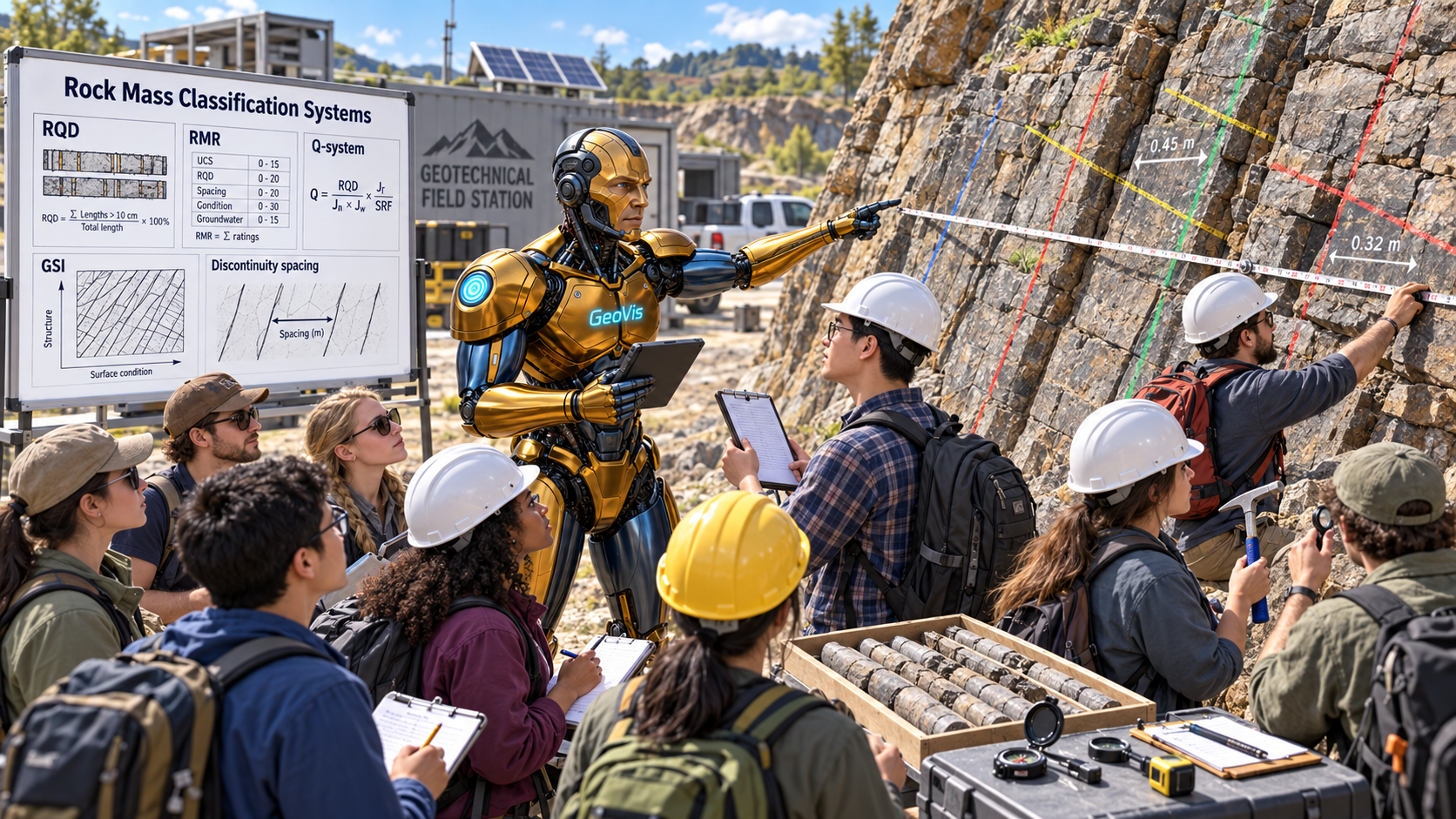
Rock Mass Classification Systems
Rock mass classification is taught as empirical indexing: students compute RQD, …
Don U. Deere
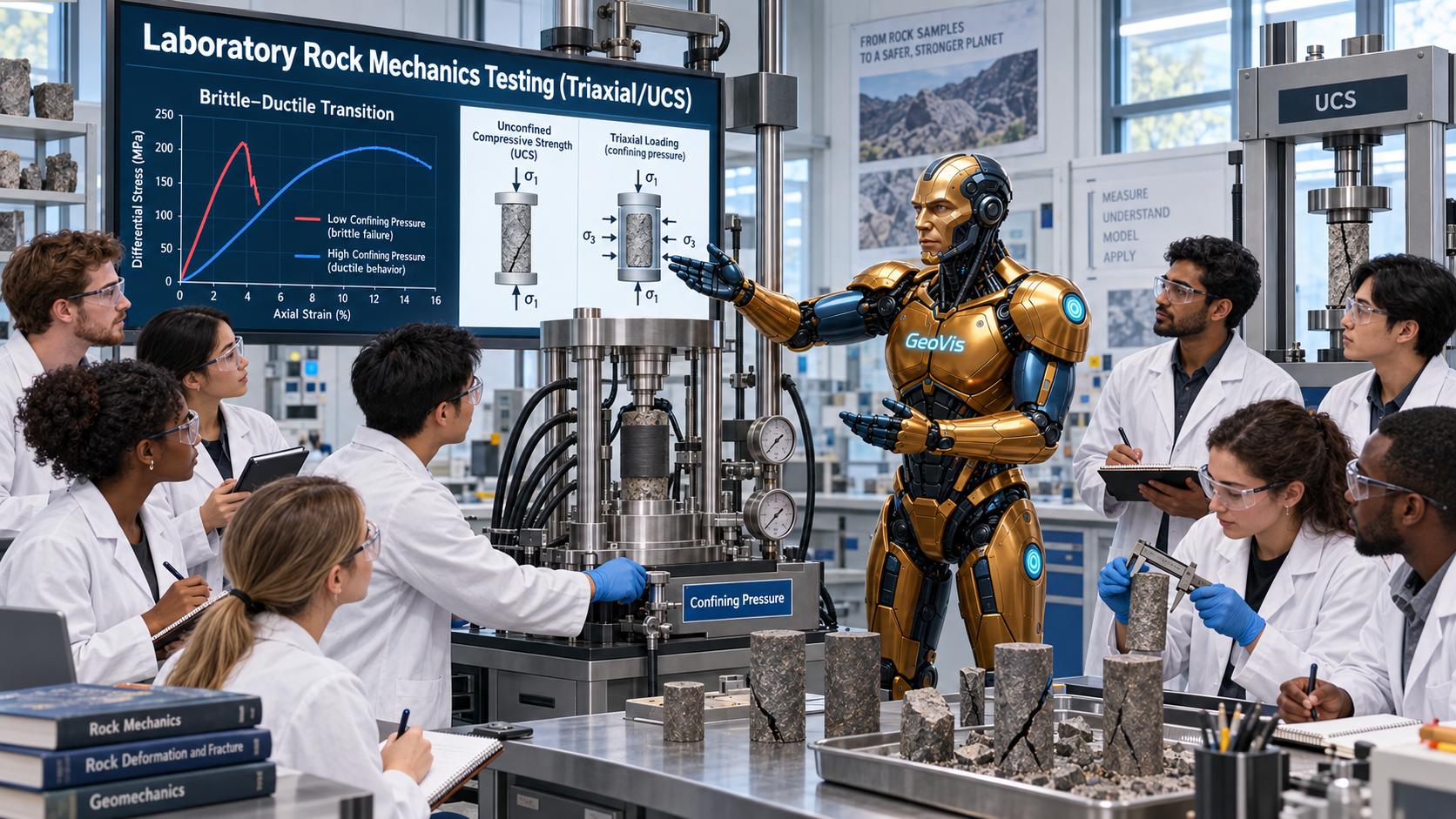
Laboratory Rock Mechanics Testing (Triaxial/UCS)
Laboratory rock mechanics testing is taught as standardized data generation: stu…
David T. Griggs
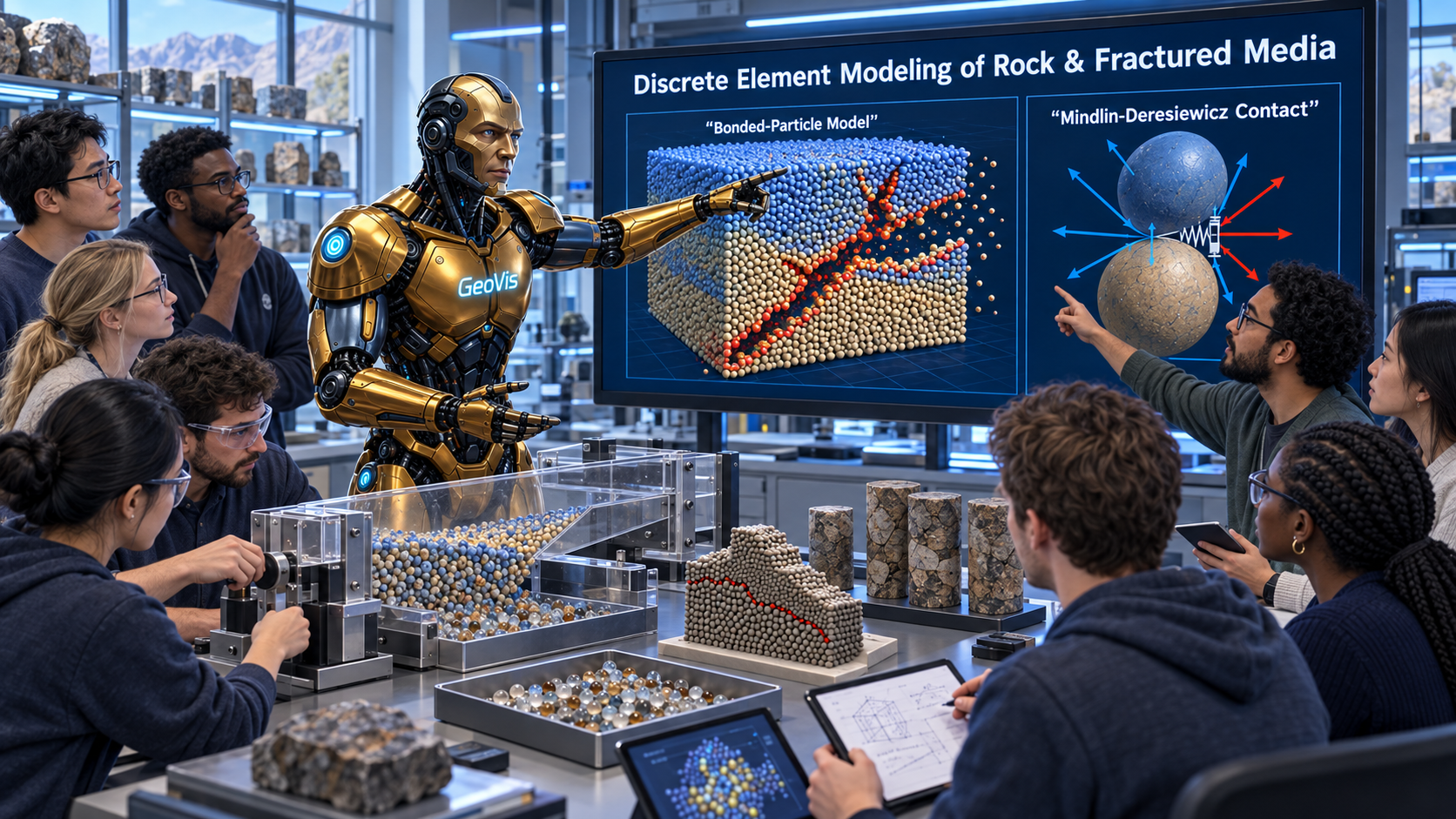
Discrete Element Modeling of Rock & Fractured Media
The discrete element method is taught as modeling emergent discontinuous behavio…
Raymond D. Mindlin
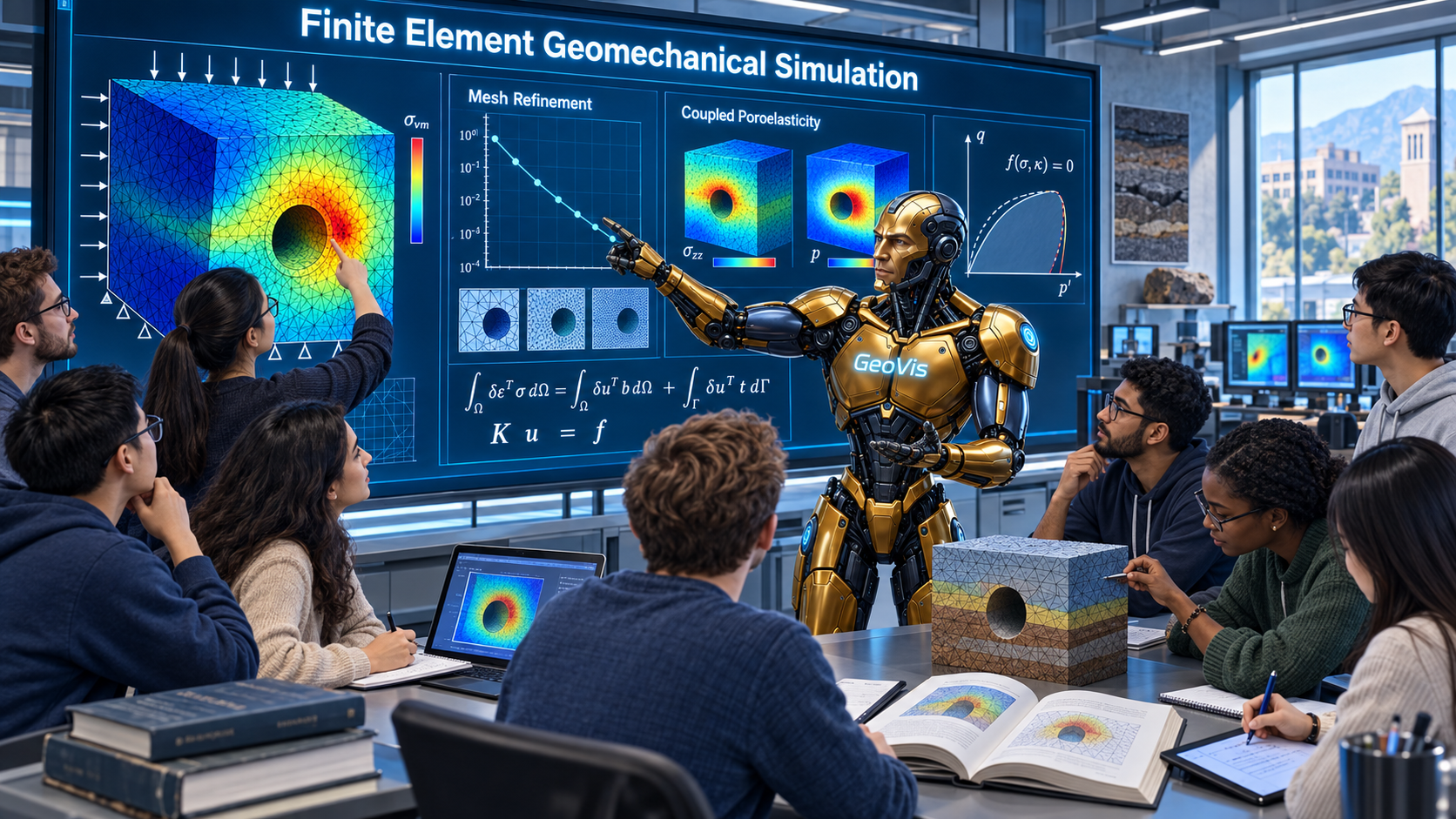
Finite Element Geomechanical Simulation
Finite element geomechanics is taught as the numerical backbone: students implem…
John Argyris
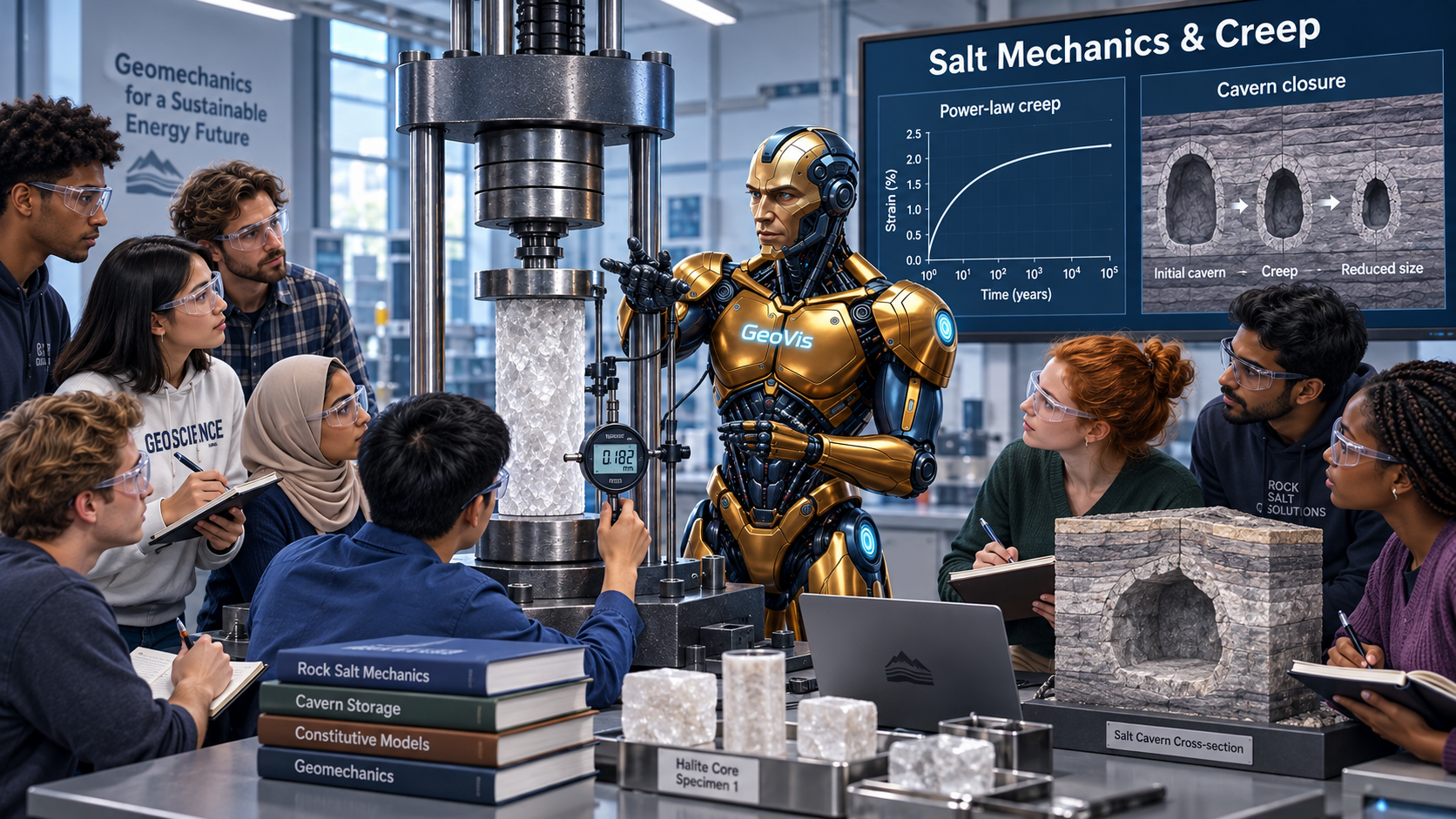
Salt Mechanics & Creep
Salt mechanics and creep is taught as time-dependent constitutive modeling: stud…
Melvin Friedman
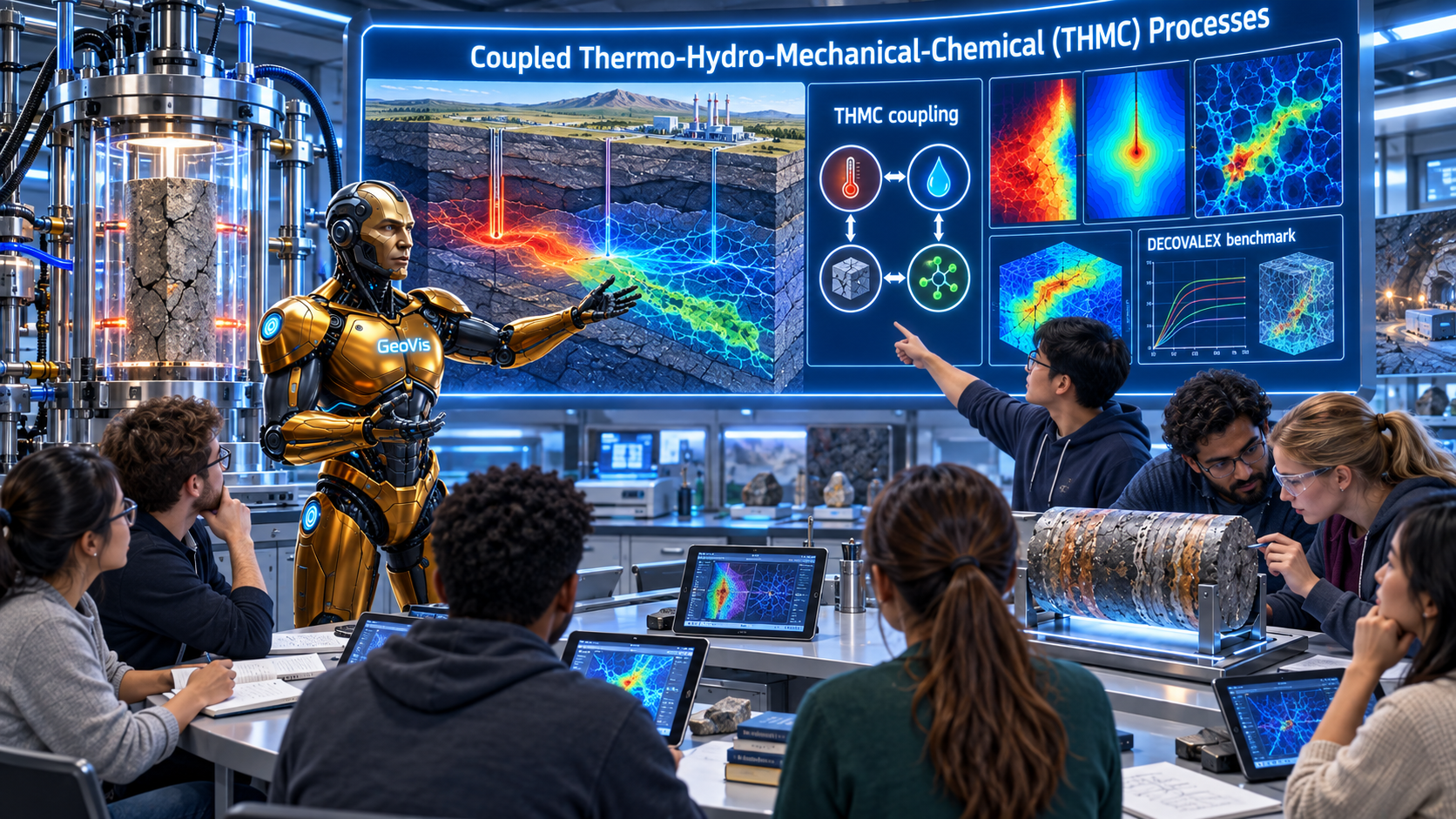
Coupled Thermo-Hydro-Mechanical-Chemical (THMC) Processes
Coupled THMC processes is taught as a multi-physics framework: students apply Co…
Olivier Coussy
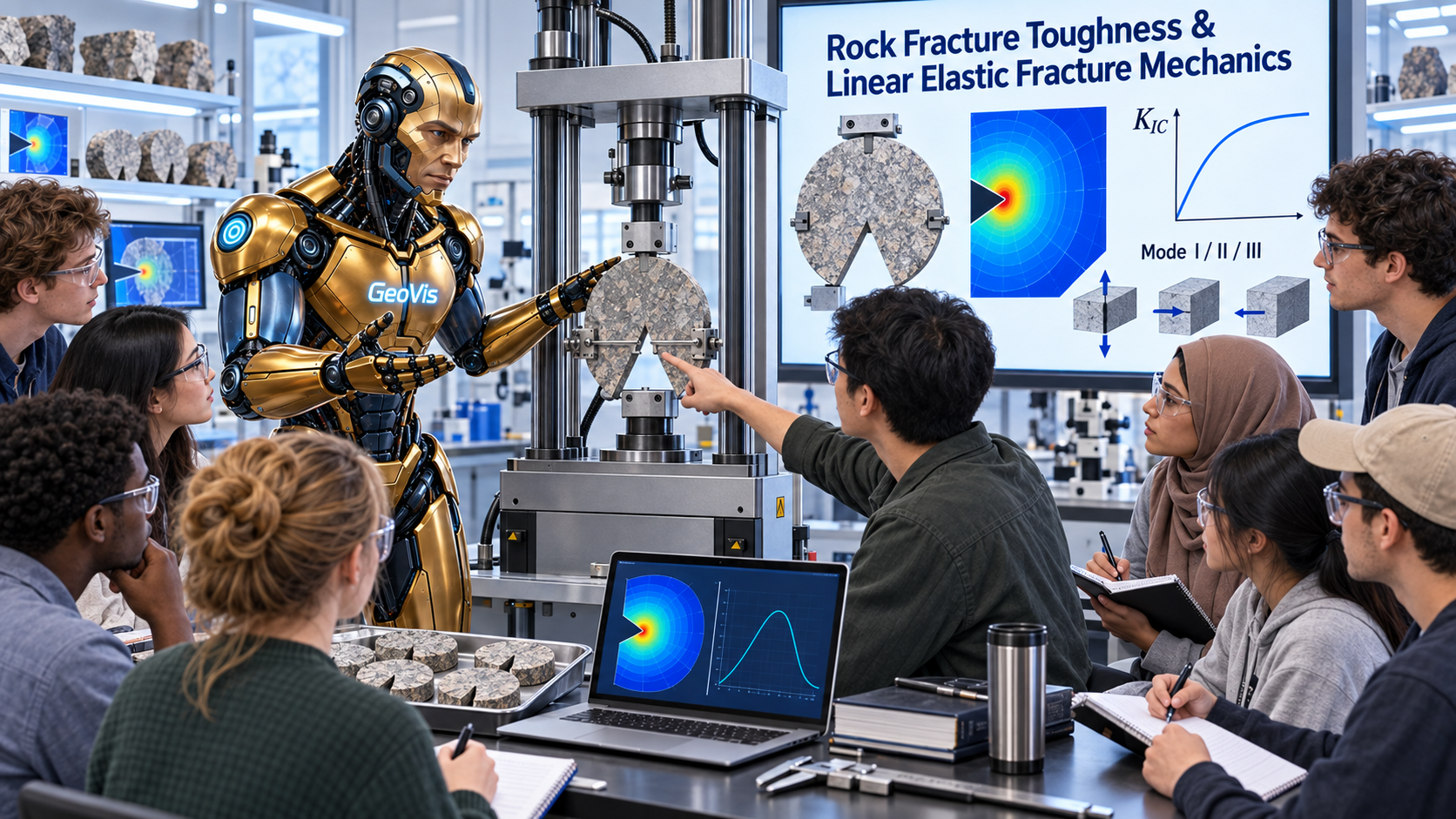
Rock Fracture Toughness & Linear Elastic Fracture Mechanics
Rock fracture toughness is taught through linear elastic fracture mechanics: stu…
George R. Irwin
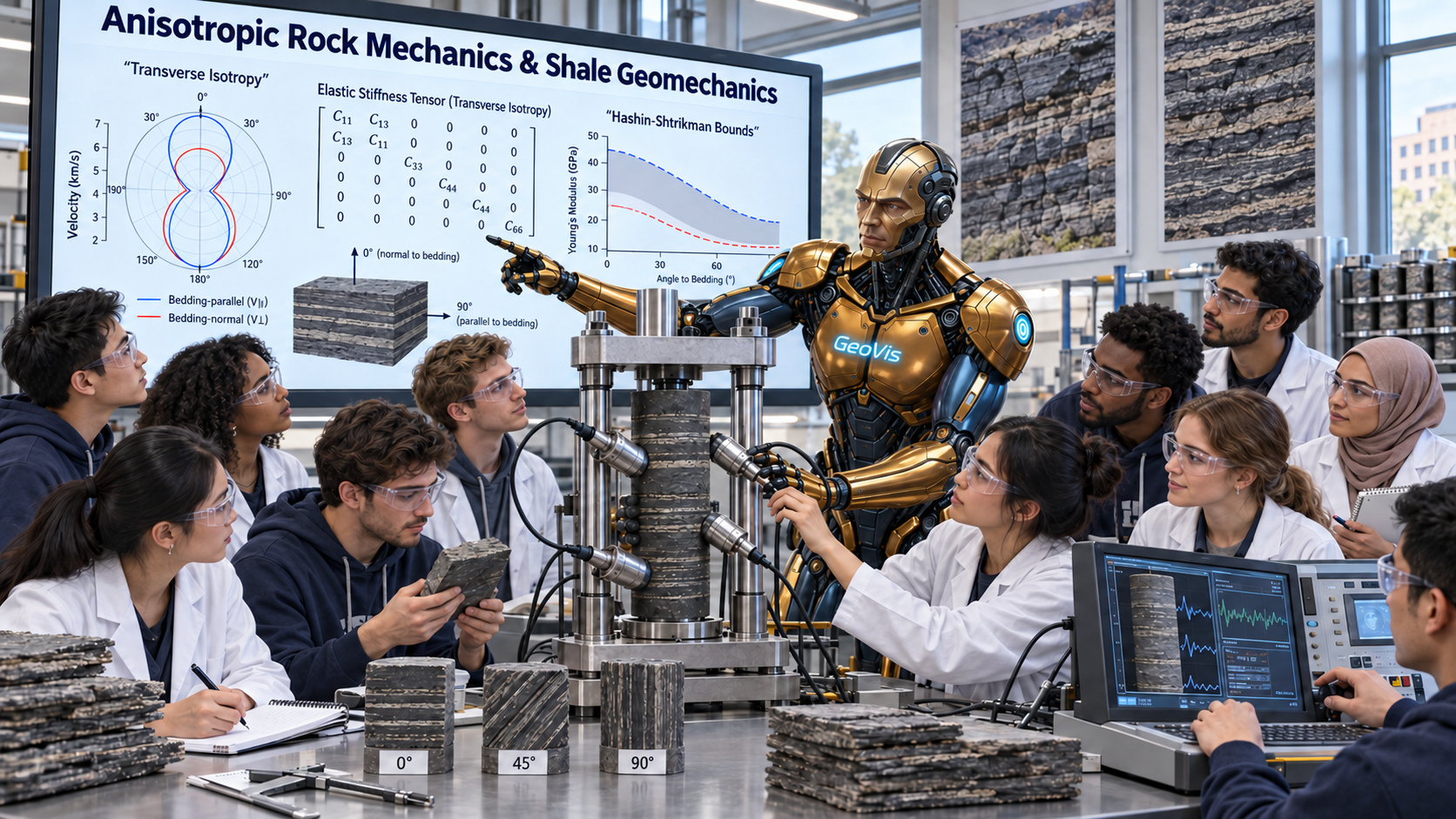
Anisotropic Rock Mechanics & Shale Geomechanics
Anisotropic rock mechanics is taught with a shale focus: students measure direct…
Zvi Hashin
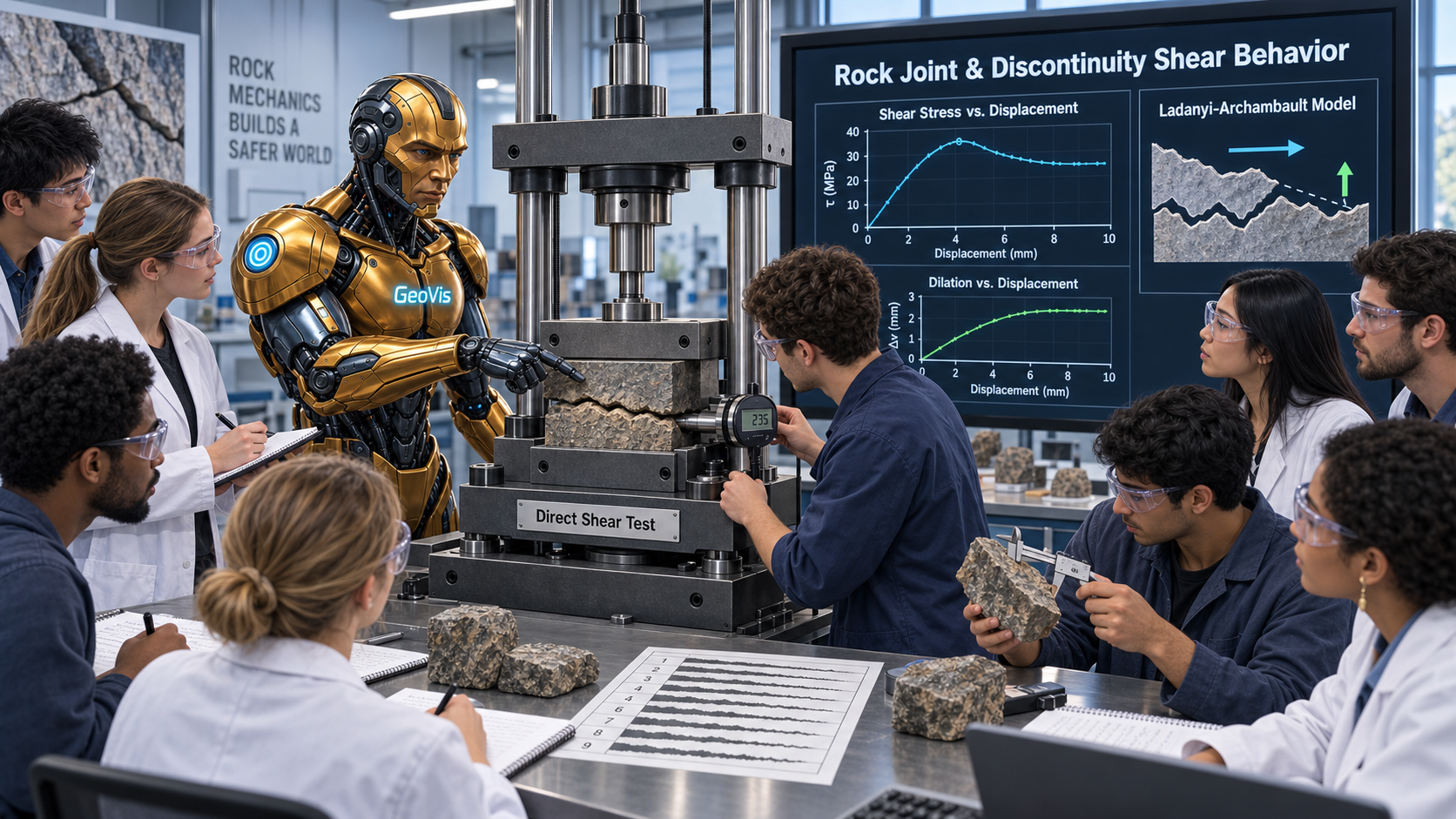
Rock Joint & Discontinuity Shear Behavior
Rock joint shear behavior is taught through roughness-dilatancy models: students…
Branko Ladanyi
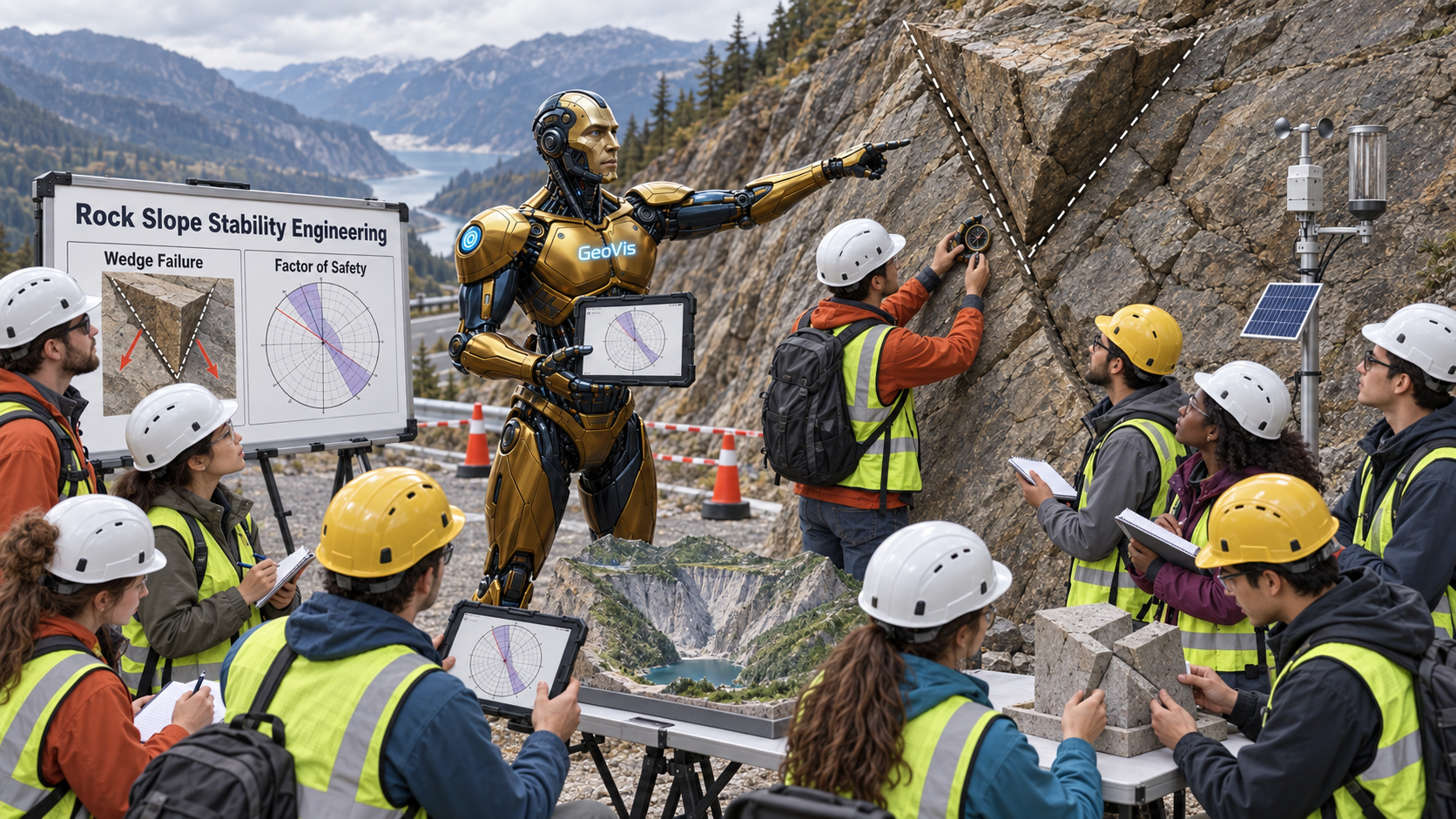
Rock Slope Stability Engineering
Rock slope stability is taught as kinematic feasibility analysis: students apply…
Richard E. Goodman
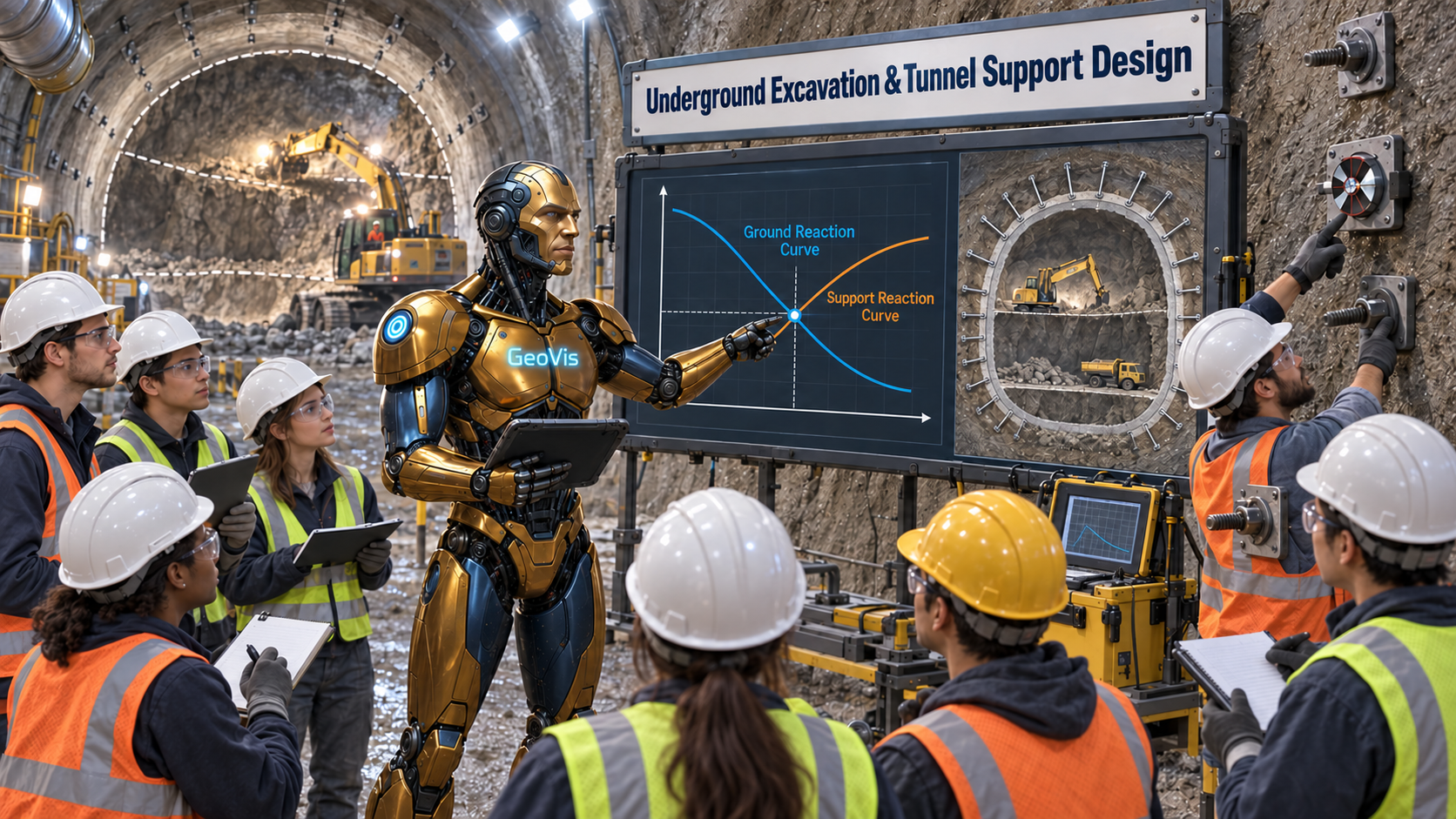
Underground Excavation & Tunnel Support Design
Underground excavation and tunnel support is taught as ground-support interactio…
Ladislaus von Rabcewicz
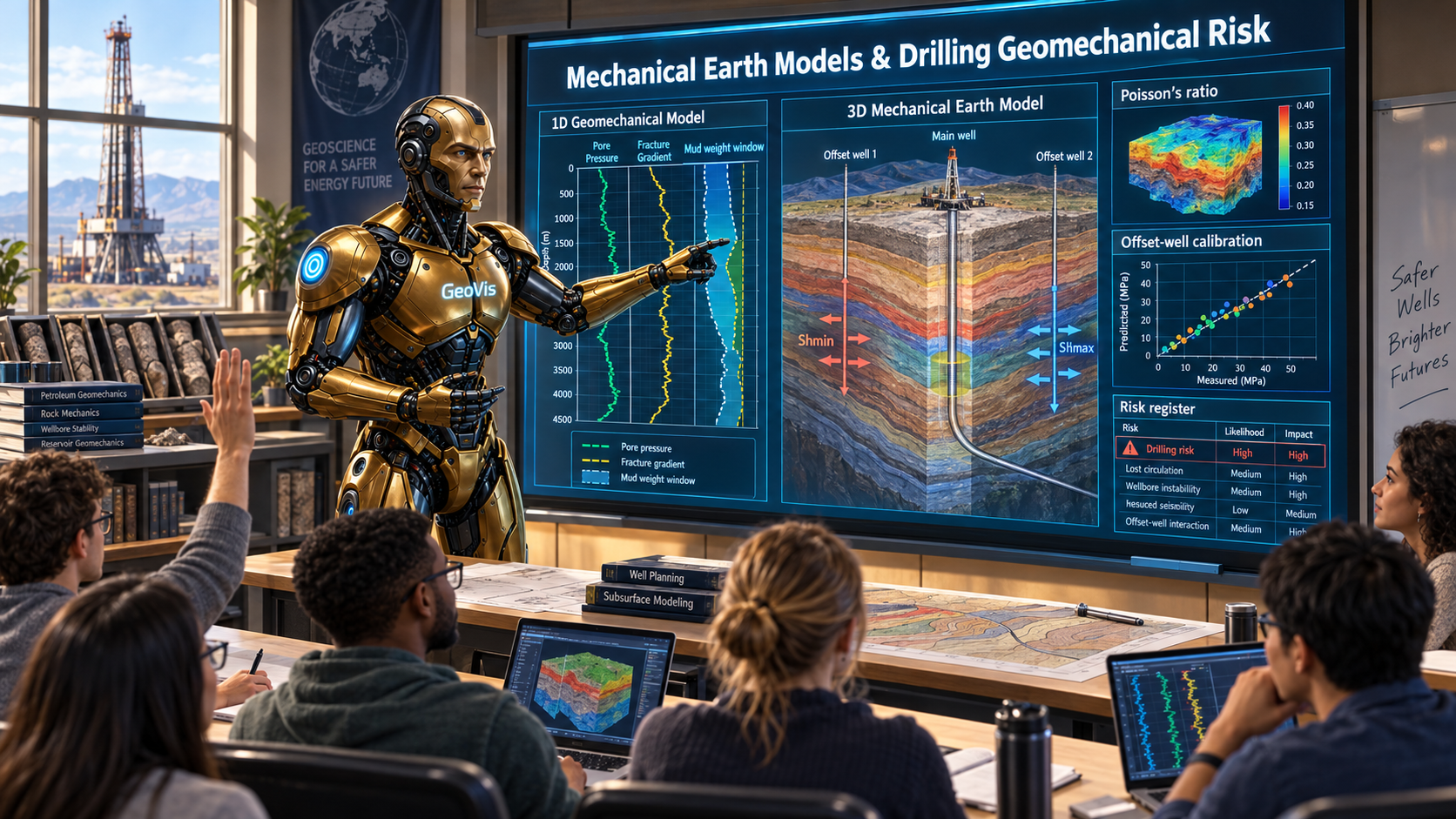
Mechanical Earth Models & Drilling Geomechanical Risk
The mechanical earth model is taught as systems integration: students combine lo…
Siméon Denis Poisson
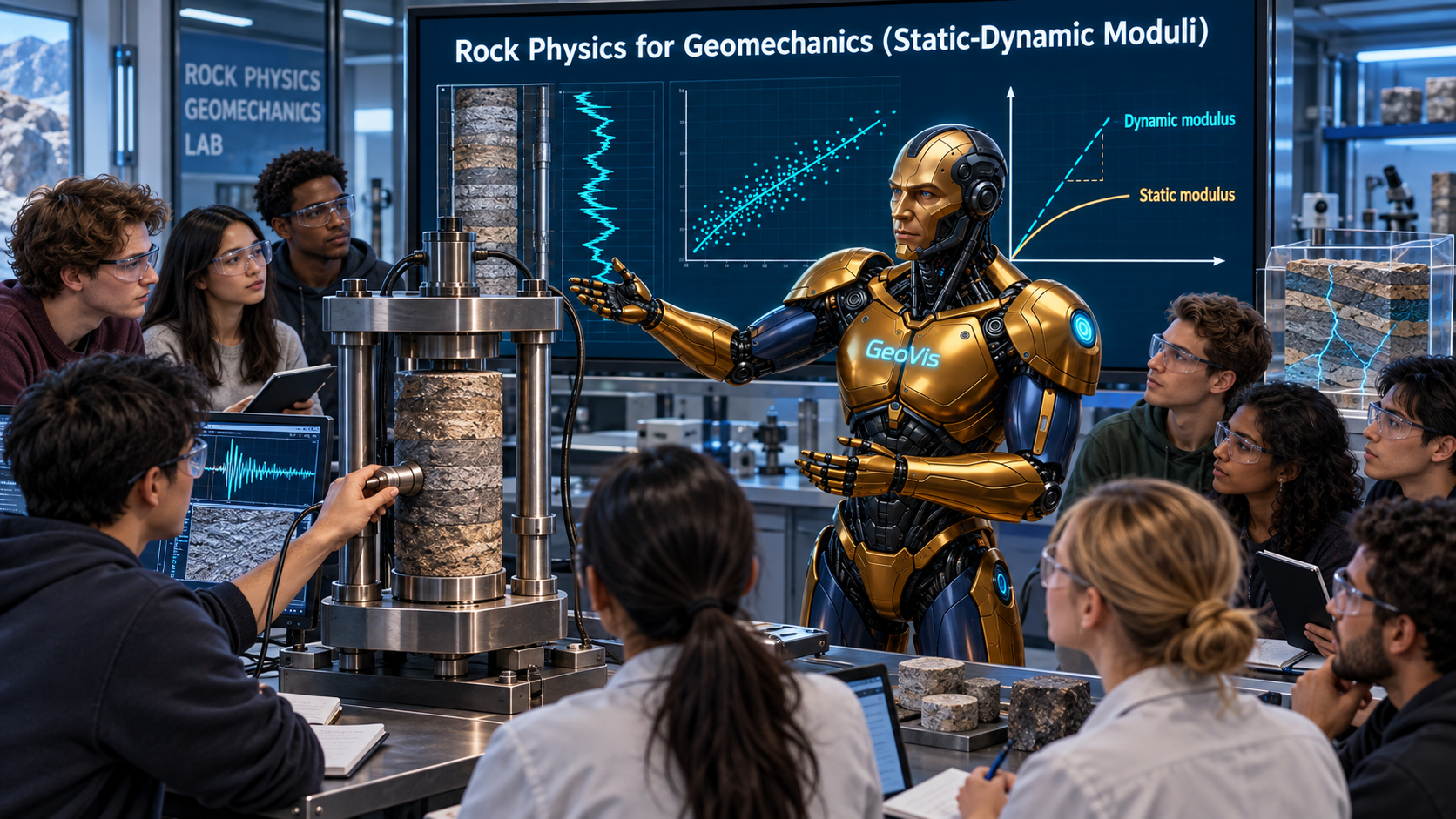
Rock Physics for Geomechanics (Static-Dynamic Moduli)
Rock physics for geomechanics is taught as static-dynamic moduli conversion: stu…
Sophie Germain