GeoVerse Lab
โ† Resource & Energy Engineering Division

Reservoir Modeling & Recovery Center

Models fluid flow in porous media through multiphase-flow simulation, integrating well-test/pressure-transient analysis, material balance, and uncertainty quantification to predict and optimize reservoir performance and recovery.

Reservoir Modeling & Recovery CenterWell & Production Engineering CenterRock Mechanics & Geomechanics CenterGeothermal Energy Engineering CenterCarbon Engineering CenterHydrogen Energy & Storage CenterMining Engineering CenterNuclear Energy Engineering Center
Research Fields 17
๐Ÿ’ง
๐Ÿ’ง Multiphase Flow, Relative Permeability & Immiscible Displacement
Multiphase-flow theory in reservoir engineering describes how two or more immiscible fluidโ€ฆ
๐Ÿงช
๐Ÿงช Compositional & Equation-of-State Reservoir Simulation
Compositional reservoir simulation models hydrocarbon fluid behavior by tracking the mole โ€ฆ
Naturally Fractured Reservoir Modeling
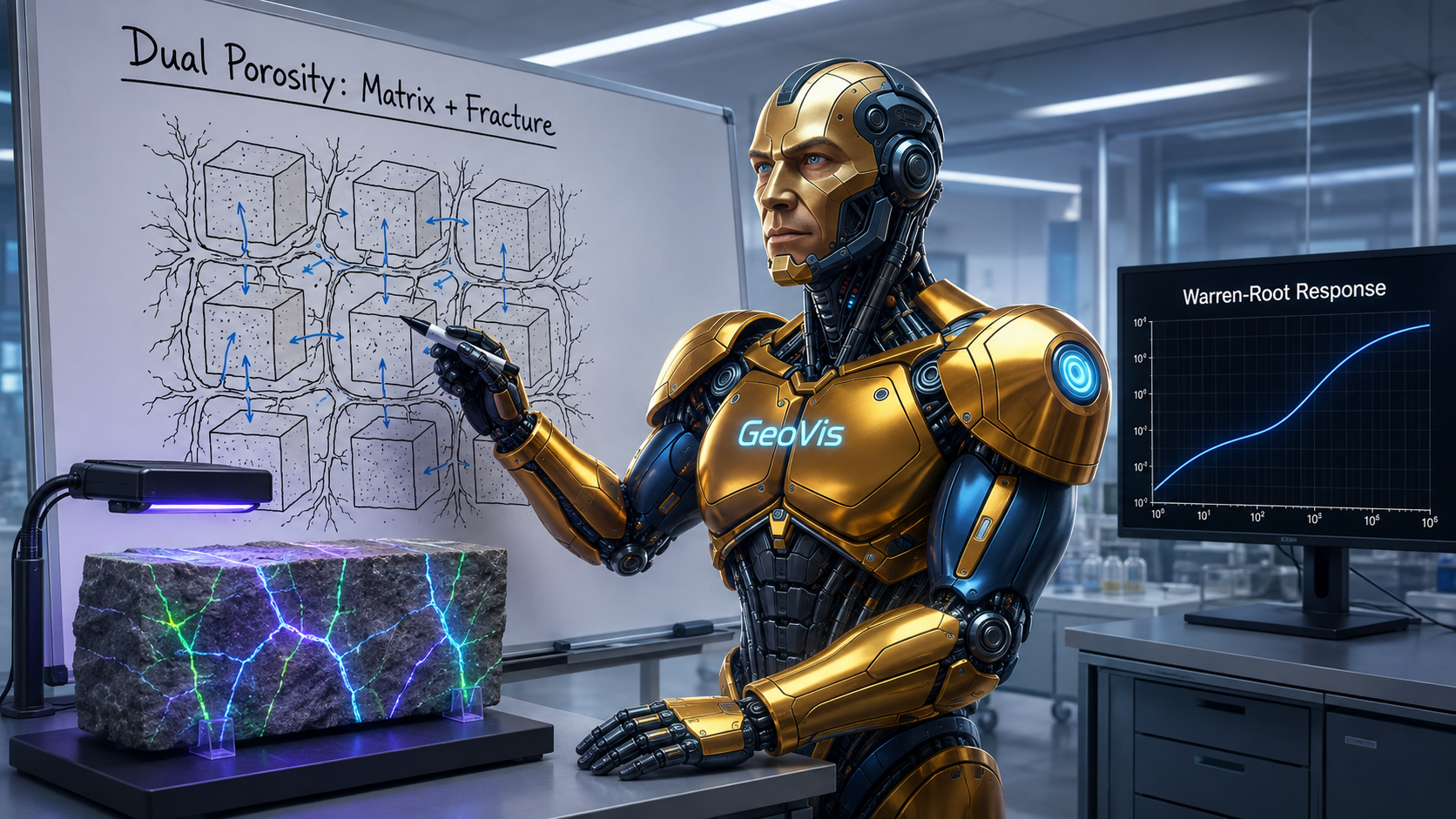
๐Ÿชจ Naturally Fractured Reservoir Modeling
Naturally fractured reservoir modeling represents rock that contains two distinct, intercoโ€ฆ
Numerical Linear Solvers for Reservoir Simulation
๐Ÿงฎ Numerical Linear Solvers for Reservoir Simulation
This field develops and benchmarks the iterative and direct linear-algebra algorithms thatโ€ฆ
Iterative Linearization of Nonlinear Reservoir Flow Equations
๐Ÿ” Iterative Linearization of Nonlinear Reservoir Flow Equations
Reservoir flow equations are nonlinear because rock and fluid properties, relative permeabโ€ฆ
๐Ÿ“ˆ
๐Ÿ“ˆ Numerical Stability & Convergence Analysis of Reservoir Simulators
This field establishes how large a timestep a finite-difference or finite-volume reservoirโ€ฆ
Well-Posedness & Analytical Solution Theory for Reservoir Flow PDEs
๐Ÿ“ Well-Posedness & Analytical Solution Theory for Reservoir Flow PDEs
This field derives and verifies closed-form or series solutions to the partial differentiaโ€ฆ
Permeability-Porosity Relationships & Pore Structure Theory
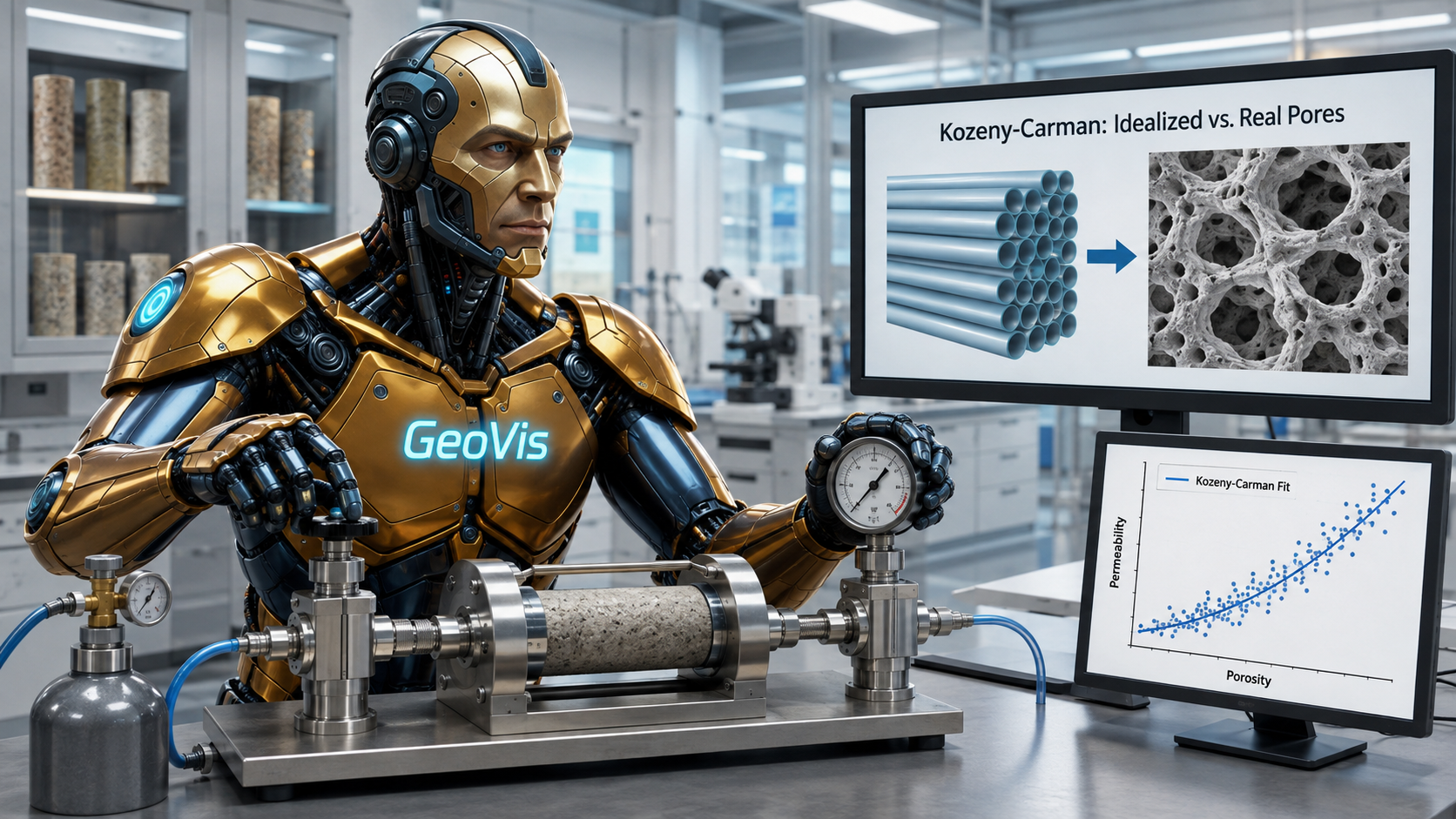
๐Ÿ•ณ๏ธ Permeability-Porosity Relationships & Pore Structure Theory
This field develops theoretical and empirical relationships that predict a rock's permeabiโ€ฆ
Digital Rock Physics & Pore-Scale CT Imaging
๐Ÿ”ฌ Digital Rock Physics & Pore-Scale CT Imaging
Digital rock physics reconstructs a rock's three-dimensional pore structure from X-ray micโ€ฆ
Wettability & Interfacial Phenomena in Reservoir Rocks
๐Ÿ’  Wettability & Interfacial Phenomena in Reservoir Rocks
Wettability characterization quantifies which fluid, oil or water, preferentially coats a โ€ฆ
๐Ÿ“Š
๐Ÿ“Š Reservoir Heterogeneity Characterization
Reservoir heterogeneity characterization quantifies how unevenly permeability is distributโ€ฆ
Reservoir Upscaling & Homogenization of Heterogeneous Media
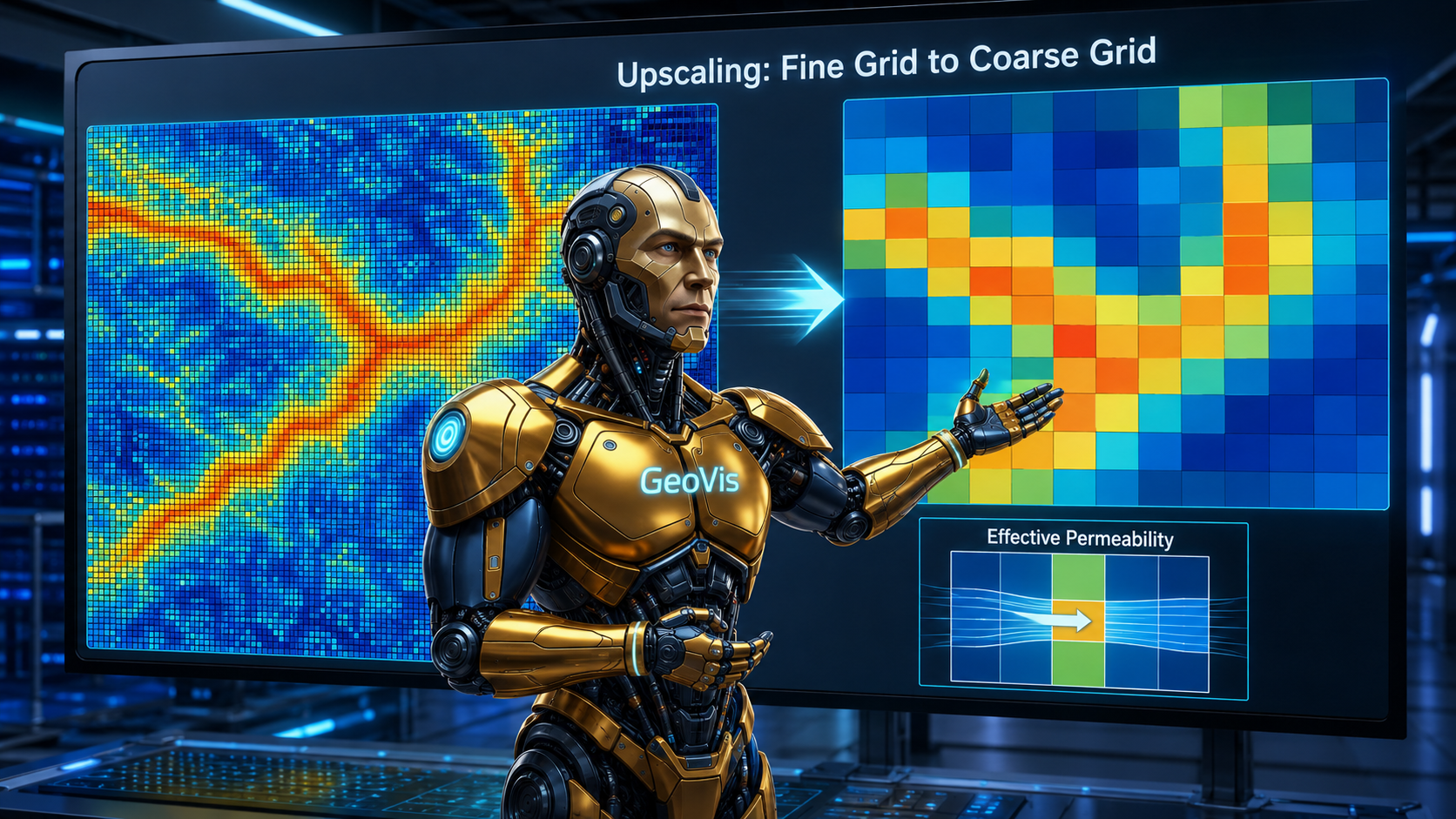
๐Ÿ—บ๏ธ Reservoir Upscaling & Homogenization of Heterogeneous Media
Reservoir upscaling replaces a fine geocellular model's permeability and porosity fields, โ€ฆ
Material Balance Equations for Oil & Gas Reservoirs
โš–๏ธ Material Balance Equations for Oil & Gas Reservoirs
The material balance equation applies conservation of mass to a hydrocarbon reservoir treaโ€ฆ
๐ŸŒŠ
๐ŸŒŠ Aquifer Influx & Transient Boundary Flow Analysis
Aquifer-influx models quantify how much water flows from a connected water-bearing formatiโ€ฆ
Pressure Transient Analysis via Operational Calculus
๐Ÿ“Ÿ Pressure Transient Analysis via Operational Calculus
Pressure transient analysis interprets the pressure response recorded at a well during a cโ€ฆ
๐ŸŽฏ
๐ŸŽฏ History Matching & Gradient-Based Inverse Problems
History matching is the inverse problem of adjusting uncertain reservoir-simulation-model โ€ฆ
Streamline Simulation & Hele-Shaw Flow Analogy
๐ŸŒ€ Streamline Simulation & Hele-Shaw Flow Analogy
Streamline simulation reformulates the three-dimensional multiphase reservoir flow problemโ€ฆ