๐ŸŽ“GeoAcademyGeoVerse Lab
โ† GeoAcademy System Administration College

Software Engineering & Development Center

This department trains software engineers to treat research software as a first-class artifact. Students work project by project across concrete artifact types โ€” complete verified packages (GeoCode), micro-function blocks (GeoHub), verified numerical modules (GeoSDK), agent-executable knowledge blocks (GeoShelf), and GitHub research-code reproduction (GeoStream) โ€” while learning to design taxonomies, build verification gates, and establish provenance/lineage standards distinct from database operations and application-runtime operations. Graduates leave able to take research code and turn it into a trustworthy, reusable asset on their own.
โš™๏ธ GeoAcademy System Administration College๐Ÿ–ฅ๏ธ AI & Computing Sciences College๐Ÿ”ฌ Basic Sciences Collegeโšก Intelligent Geophysical Exploration College๐Ÿ›ข๏ธ Resource & Energy Engineering College๐ŸŒ Applied Geoscience Solutions College๐Ÿ’ผ Economics, Policy & Strategy for the Future College๐ŸŽ“ Education & Training Development College๐Ÿš€ Innovation & International Collaboration College
Infrastructure & Cloud Operations DepartmentDatabase & Knowledge Systems DepartmentAI Operations & Automation DepartmentCybersecurity & Compliance DepartmentApplication & Simulation Operations CenterMeta-Governance & Interface CenterSoftware Engineering & Development Center
๐Ÿค–
๐Ÿ”‘
โญ Edsger W. Dijkstra
Chair

Researchers (real GeoVerse Lab members) 18

John C. Reynolds๐Ÿ”‘
1935โ€“2013
John C. Reynolds
Researcher
๐Ÿ’ก Invented separation logic (2002) for verifying programs with shared mutable state, and proved the abstraction theorem for parametric polymorphism (1983)
Edmund M. Clarke๐Ÿ”‘
1945โ€“2020
Edmund M. Clarke
Researcher
๐Ÿ’ก Co-invented model checking with computation tree logic (CTL, 1981), enabling automated exhaustive verification of finite-state systems; 2007 ACM Turing Award
๐Ÿง‘โ€๐Ÿ”ฌ
๐Ÿ”‘
1930โ€“2009
Peter J. Landin
Researcher
๐Ÿ’ก Showed programming languages could be given rigorous semantics via the lambda calculus, designing the SECD abstract machine (1964) and proposing ISWIM in 'The Next 700 Programming Languages' (1966)
๐Ÿง‘โ€๐Ÿ”ฌ
๐Ÿ”‘
1939โ€“2018
Zohar Manna
Researcher
๐Ÿ’ก Co-developed deductive program synthesis (with Richard Waldinger) โ€” deriving correct-by-construction programs directly from formal specifications โ€” and temporal-logic verification of concurrent systems (with Amir Pnueli)
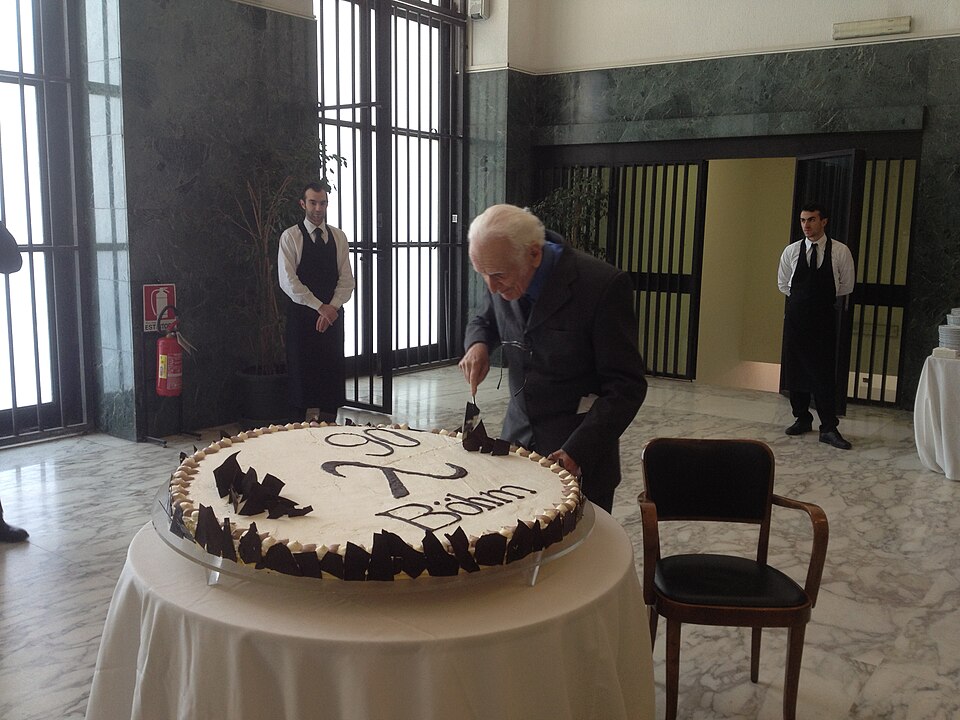
Corrado Bรถhm๐Ÿ”‘
1923โ€“2017
Corrado Bรถhm
Researcher
๐Ÿ’ก Proved with Giuseppe Jacopini (1966) that any flowchart program can be rewritten using only sequence, selection, and iteration โ€” the mathematical foundation of structured programming
๐Ÿง‘โ€๐Ÿ”ฌ
๐Ÿ”‘
1919โ€“1996
Harlan D. Mills
Researcher
๐Ÿ’ก Created Cleanroom Software Engineering and the Chief Programmer Team concept, combining mathematically verified design with statistical usage-based testing
๐Ÿง‘โ€๐Ÿ”ฌ
๐Ÿ”‘
1918โ€“1979
Maurice H. Halstead
Researcher
๐Ÿ’ก Founded 'Software Science' (1977), the first systematic quantitative theory of program complexity based on operator/operand counts (Halstead complexity measures)
๐Ÿง‘โ€๐Ÿ”ฌ
๐Ÿ”‘
1933โ€“2018
Gerald M. Weinberg
Researcher
๐Ÿ’ก Founded the study of programmer psychology and 'egoless programming' in The Psychology of Computer Programming (1971), the intellectual basis of structured code review culture
๐Ÿง‘โ€๐Ÿ”ฌ
๐Ÿ”‘
1934โ€“2018
Boris Beizer
Researcher
๐Ÿ’ก Authored Software Testing Techniques (1983), systematizing black-box/white-box testing methods and defect taxonomies into a rigorous discipline
๐Ÿง‘โ€๐Ÿ”ฌ
๐Ÿ”‘
1933โ€“2009
John D. Musa
Researcher
๐Ÿ’ก Founded software reliability engineering (SRE), developing execution-time based failure models and the operational profile concept for quantitative release certification
Winston W. Royce๐Ÿ”‘
1929โ€“1995
Winston W. Royce
Researcher
๐Ÿ’ก Authored 'Managing the Development of Large Software Systems' (1970), whose phased-development diagram was later popularized (and often misread) as the waterfall model
David J. Wheeler๐Ÿ”‘
1927โ€“2004
David J. Wheeler
Researcher
๐Ÿ’ก Invented the closed subroutine and subroutine call mechanism (the 'Wheeler jump') on EDSAC, enabling the first subroutine libraries and modular software reuse
George E. Forsythe๐Ÿ”‘
1917โ€“1972
George E. Forsythe
Researcher
๐Ÿ’ก Founded Stanford University's Computer Science Department (1965) and helped establish numerical analysis and computer science as rigorous academic disciplines
Jean E. Sammet๐Ÿ”‘
1928โ€“2017
Jean E. Sammet
Researcher
๐Ÿ’ก Authored Programming Languages: History and Fundamentals (1969), the first comprehensive systematic classification of programming languages; first female president of ACM
๐Ÿง‘โ€๐Ÿ”ฌ
๐Ÿ”‘
1944โ€“2021
Brad J. Cox
Researcher
๐Ÿ’ก Co-created Objective-C (1981) and proposed 'Software-ICs' โ€” treating software modules as manufactured, catalogued, reusable parts analogous to integrated circuits
Nils J. Nilsson๐Ÿ”‘
1933โ€“2019
Nils J. Nilsson
Researcher
๐Ÿ’ก Co-created STRIPS (1971), the precondition-effect action-representation formalism that let autonomous agents plan and execute sequences of knowledge blocks to reach goals; co-invented the A* search algorithm
Suzanne Briet๐Ÿ”‘
1894โ€“1989
Suzanne Briet
Researcher
๐Ÿ’ก Founded documentation science with 'Qu'est-ce que la documentation?' (1951), defining a document as any object organized to serve as evidence of a fact โ€” the conceptual root of provenance and metadata tracking
Dรฉnes Kล‘nig๐Ÿ”‘
1884โ€“1944
Dรฉnes Kล‘nig
Researcher
๐Ÿ’ก First textbook of graph theory (1936); Kล‘nig's theorem on bipartite matching